
Books About Anxiety for KidsWhat to Notice While You Read
Choose a book that fits what your child is facing. For school goodbyes, start with The Kissing Hand. For missing someone, consider The Invisible String. For worries that follow a child through the day, try Wemberly Worried or The Huge Bag of Worries. Below, you’ll find eight possibilities and ways to read together without requiring your child to explain their feelings.
Jump to the books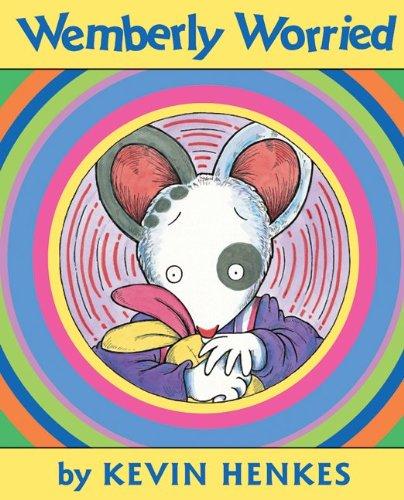
Eight picture books.
Read them at your child’s pace.
Books about separation anxiety
If you are looking for books about separation anxiety, two titles on this page offer different starting points.
The Kissing Hand by Audrey Penn follows Chester Raccoon as he prepares to leave his mother for school. Her gesture gives him a reminder of her love to carry with him. Choose this story when your child is interested in school goodbyes or having a familiar reminder while away.
The Invisible String by Patrice Karst uses an imaginary string of love to describe connection between people who are apart. It offers a broader conversation about missing someone. Preview it and decide whether that way of describing love fits your family.
Read at a time when your child is willing, rather than making finishing the book another requirement at the door. They may want to talk about the character, ask about your own experiences, or simply hear the story.
Make the goodbye plan clear
Alongside reading, explain who will be with your child and when they can expect you—or another familiar caregiver—to return. For a younger child, a familiar event such as “after afternoon snack” may be more useful than a clock time. Choose a brief goodbye routine you can repeat and follow through on the plan.
You might say, “You wish I could stay. Ms. Lee will be with you, and Grandma will pick you up after snack.” Use the people and plans that are actually true for your child.
If goodbyes remain very difficult, or worry affects school, sleep, or everyday activities, speak with your child’s pediatrician or a qualified mental health professional. A book can be part of your time together; it does not replace support your child needs.
Eight books about anxiety for kids
These picture books about anxiety follow worries about school, goodbyes, and bedtime. Choose one that interests your child, borrow it from your library, and read it together.
Reading To Connect is for family reading: a caregiver and a child, reading one book together. We don’t set an age limit on that. We list the publisher’s suggested ages so you can see the range, but you know your child best. Choose the book that fits the child in front of you.
Tap a title to read more.
| Title | Author | Ages (publisher) | Best for |
|---|---|---|---|
| Wemberly Worried | Kevin Henkes | 4 to 8 | Everyday worries and starting school |
| Ruby Finds a Worry | Tom Percival | 3 to 6 | A worry that keeps growing |
| The Huge Bag of Worries | Virginia Ironside | 4 to 8 | Worries that follow a child through the day |
| Way Past Worried | Hallee Adelman | 4 to 8 | Nerves about joining other children |
| The Kissing Hand | Audrey Penn | 3 to 7 | School goodbyes |
| The Invisible String | Patrice Karst | 4 to 8 | Missing someone and being apart |
| Scaredy Squirrel at Night | Melanie Watt | 4 to 8 | Bedtime fears, with humor |
| I Am Peace: A Book of Mindfulness | Susan Verde | 4 to 8 | A quieter read about busy thoughts |
If worry affects your child's sleep, school, or daily life, talk with a pediatrician or mental health professional.
Wemberly Worried
Wemberly worries about little things, big things, and then a whole new set of things when school is about to begin. The story follows her worries even when the people around her tell her not to worry.
Listen for a worry your child calls familiar, surprising, or funny.
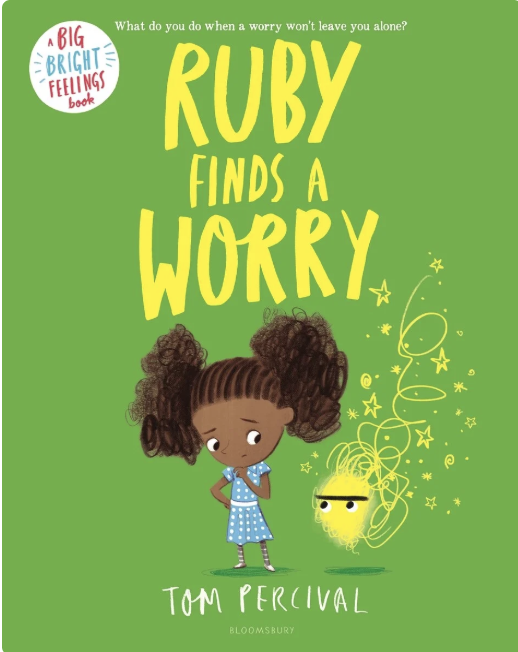
Ruby Finds a Worry
Ruby’s Worry grows until it takes up more and more of her attention. The pictures show how much space the Worry takes up. Keep the discussion about Ruby unless your child chooses to share their own feelings.
Watch what catches your child’s eye: the growing Worry, Ruby’s expressions, or another detail in the pictures.
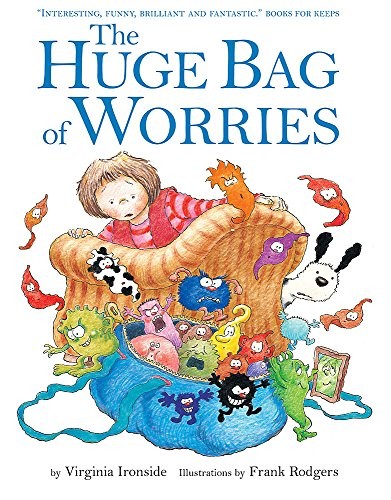
The Huge Bag of Worries
Jenny carries a bag of worries that follows her everywhere. School, home, even a trip to the bathroom: the bag comes along. The bag makes worry something you can see in the pictures.
Notice whether your child follows the bag, names a place Jenny visits, or points to something else in the pictures.
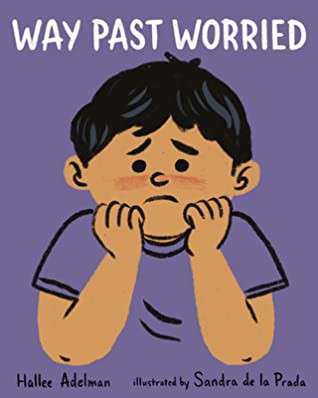
Way Past Worried
Brock is heading to a superhero party, but he’s worried no one will play with him. Enjoy the party and the costumes too. Worry does not have to be the focus.
If your child studies the costumes or comments on joining the party, respond to what they share.
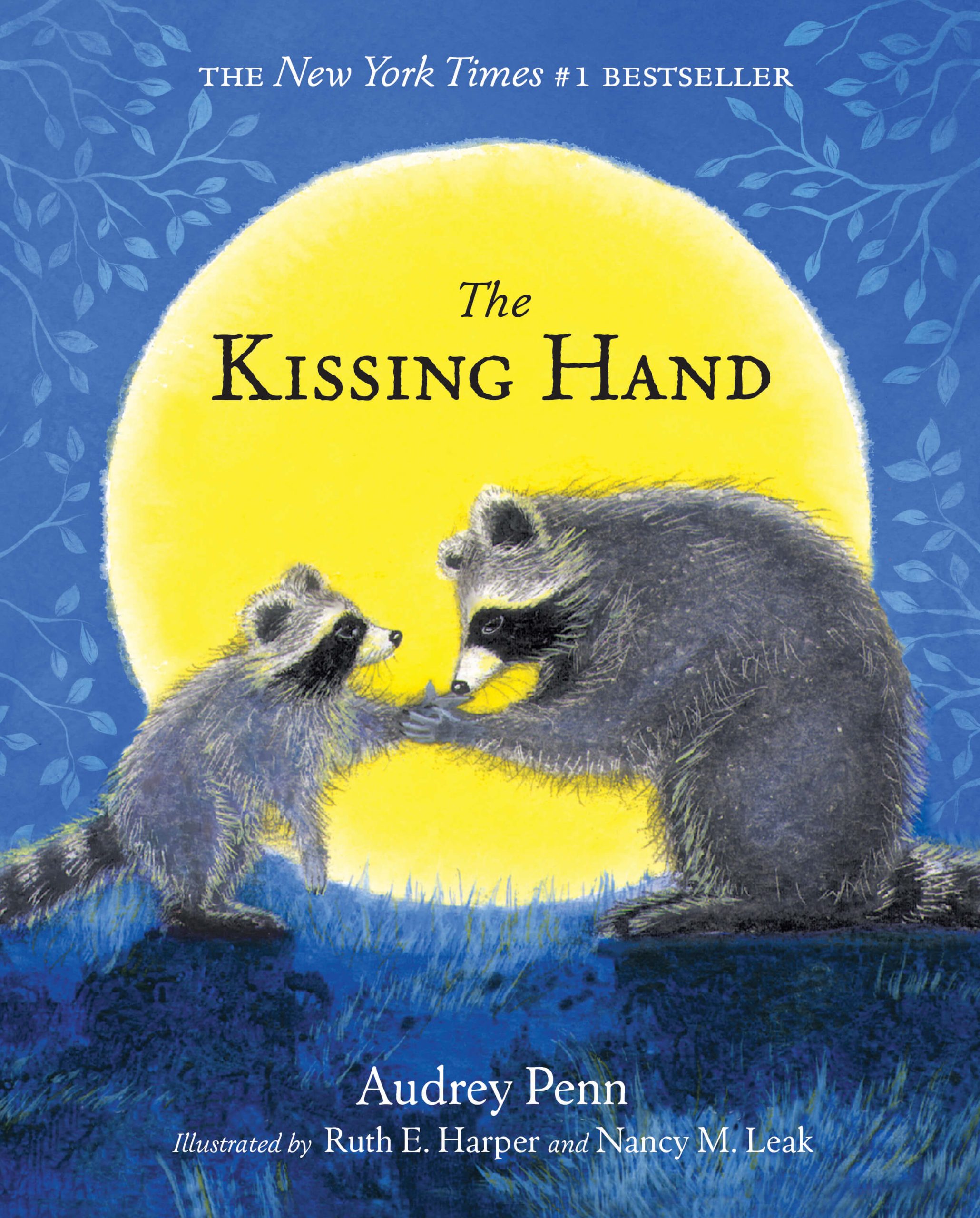
The Kissing Hand
Chester Raccoon doesn’t want to leave his mother to go to school. She offers him a small reminder of her love to carry with him. Their goodbye includes a gesture that Chester remembers at school.
Let your child show you what interests them about the goodbye, the school, or the gesture between Chester and his mother.
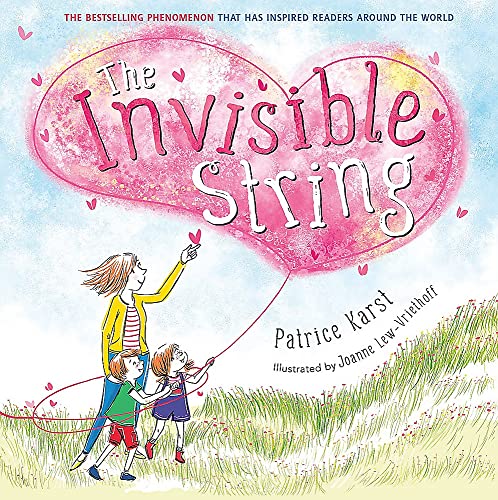
The Invisible String
A mother explains that an invisible string of love connects people, even when they are apart.
If your child names someone or wonders how the string works, stay with what they say.
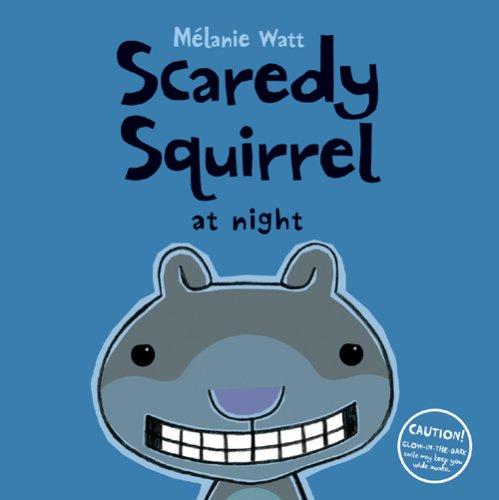
Scaredy Squirrel at Night
Scaredy tries to avoid bad dreams by staying awake. His elaborate preparations bring humor to nighttime fears. Enjoy his plans and the pictures together. Your child does not have to discuss their own bedtime fears.
Notice whether your child laughs at Scaredy’s plans, asks about the nighttime pictures, or wants a different story.
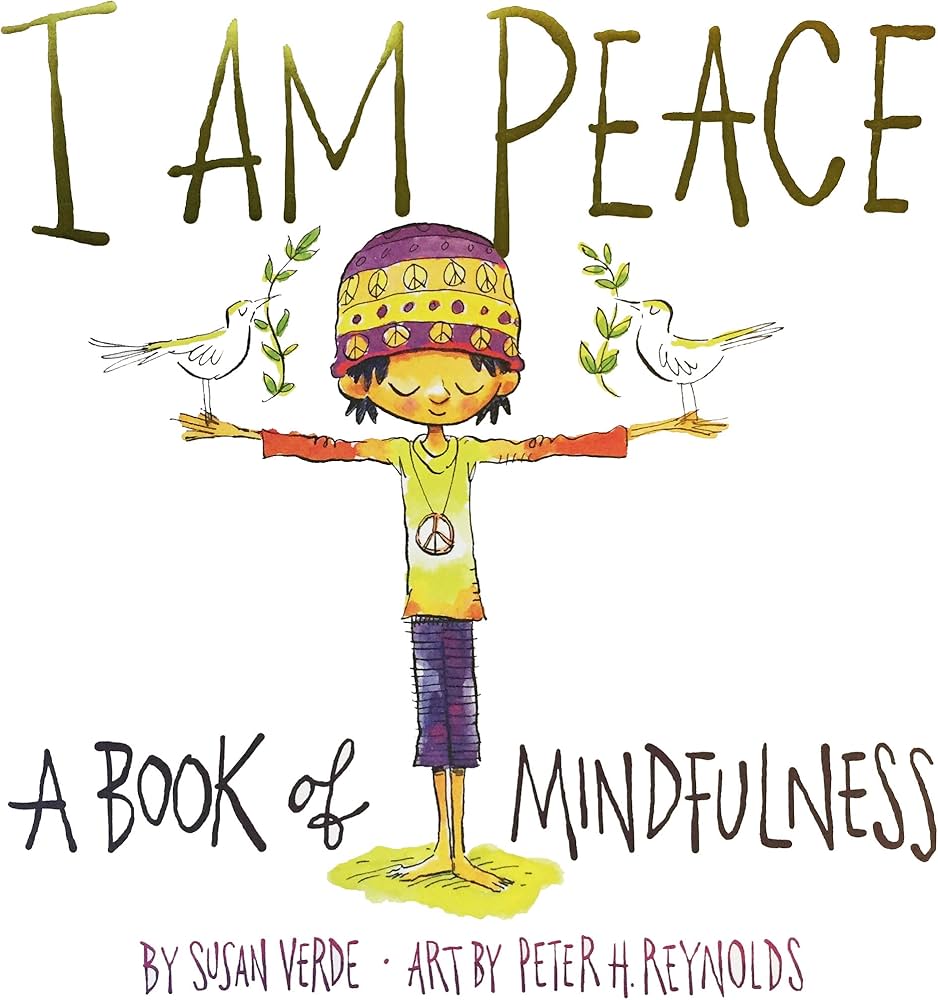
I Am Peace: A Book of Mindfulness
This book moves from worry and rushing thoughts toward paying attention to the present. Its words and pictures focus on noticing the present rather than following a character through events. Your child does not need to feel calm by the end of the book.
Follow your child’s pace, whether they stop at a picture, repeat a phrase, or turn the page.
What is the best book for children with anxiety?
Choose by the story your child wants to read and the situation you want to read about. Wemberly Worried follows everyday worries and nerves about school. The Kissing Hand focuses on goodbyes, while Scaredy Squirrel at Night approaches bedtime fears with humor. Offer a choice and let your child have a say.
What to notice while you read about anxiety with your child
Start with what your child actually does or says. Notice if they ask to see an illustration again, defend a character, laugh at a detail, or disagree with the story. Stay with that part of the story together.
Suppose your child says, “I wouldn’t go to that party either.” You don’t have to turn immediately to their next birthday invitation. Try saying, “Parties can feel like a lot,” then wait. Let your child continue or turn the page.
Silence and laughter do not tell you whether your child is worried. Listen to what your child chooses to tell you.
Read more about how to connect with your child through reading.
What not to do when you read about worry together
Reading a book about worry does not mean your child has to talk about worry. Let your child enjoy the pictures, disagree with the ending, ask for another book, or say nothing at all.
Avoid turning the story into a comparison: “See? She did it, so you can too.” Leave out questions that decide how your child feels before they’ve told you, such as, “You’re scared just like him, aren’t you?”
If a character shares a worry or tries something new, your child doesn’t owe you the same response. You don’t need a personal story, a lesson learned, or a calmer child to finish reading together.
What to say when your child reacts to the story
Respond briefly, then wait for your child:
- Stay with the story: “That’s a lot for one character to be thinking about.”
- Listen when they share: If your child says, “That happened to me,” try, “I’m listening.” Let them decide how much to say.
- Give them a choice: “Want to stay on this page or keep going?”
Use words that sound like you. If your child changes the subject, follow them or return to reading. You don’t need to keep asking questions.
For more examples, explore questions to ask about a book.
Who wrote this and how the books were chosen
Quinn Cummings, Certified Family Life Educator (CFLE-P), is the founder of Reading To Connect. She built The ENGAGE Method® to help caregivers notice and respond to their children while reading together. Read about Quinn and her work.
Quinn chose picture books about worry, school, goodbyes, and bedtime fears. Each one is in the ENGAGE catalog.
Find guidance for the book you’re reading in ENGAGE
ENGAGE has book-specific guidance for reading together, with ideas for what to say and notice. Your child decides what to share, whether to answer, and when to turn the page.
How to find a book and its guidance
After you sign up, search by title or browse by situation. These screens show how to find books about worry.
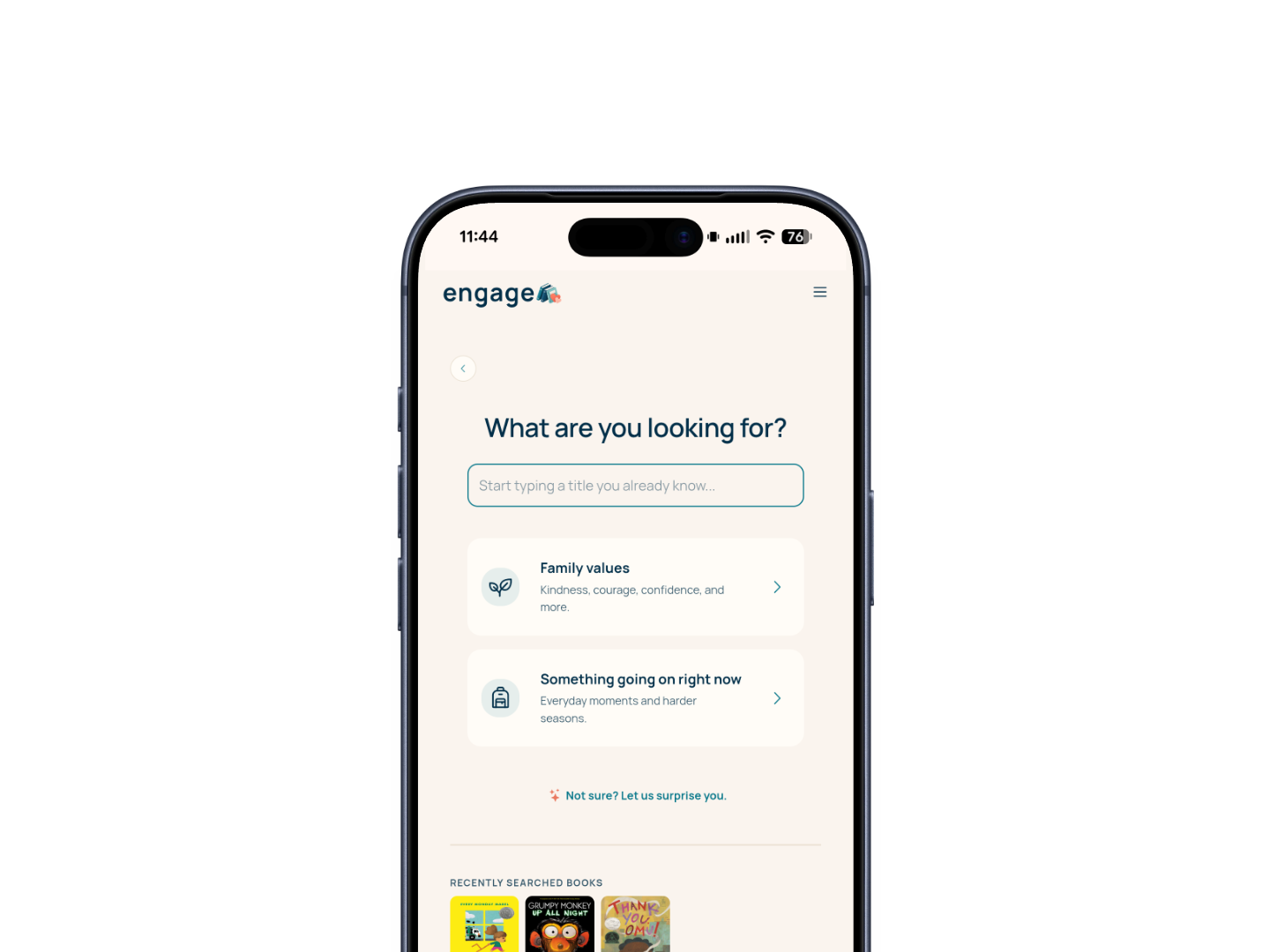
Tap a step to see the screen.01Start with what’s happening
Choose “Something going on right now.” Already have a book in mind? Type its title into the search field.
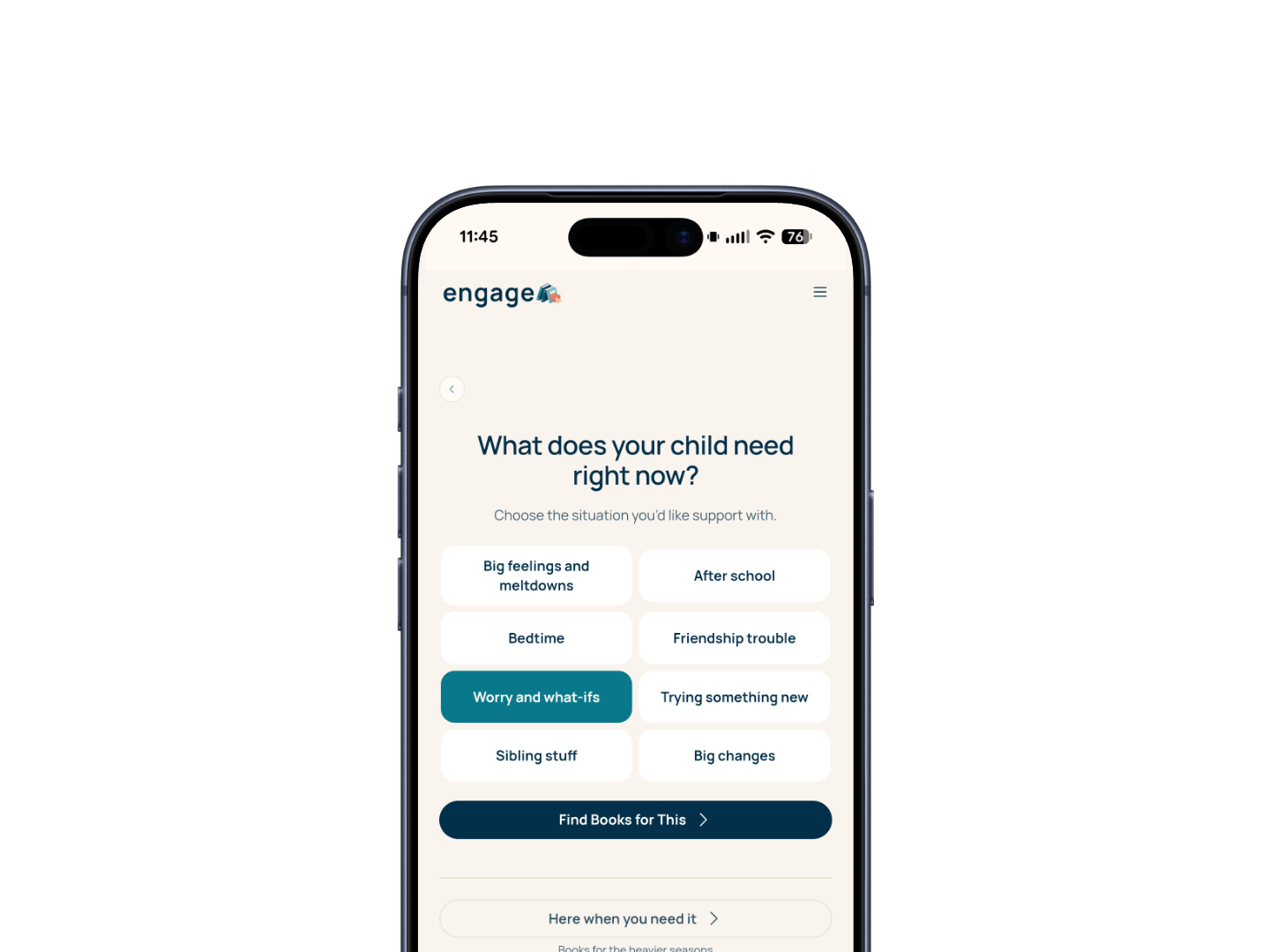
02Choose “Worry and what-ifs”
Select “Worry and what-ifs,” then tap “Find Books for This.”
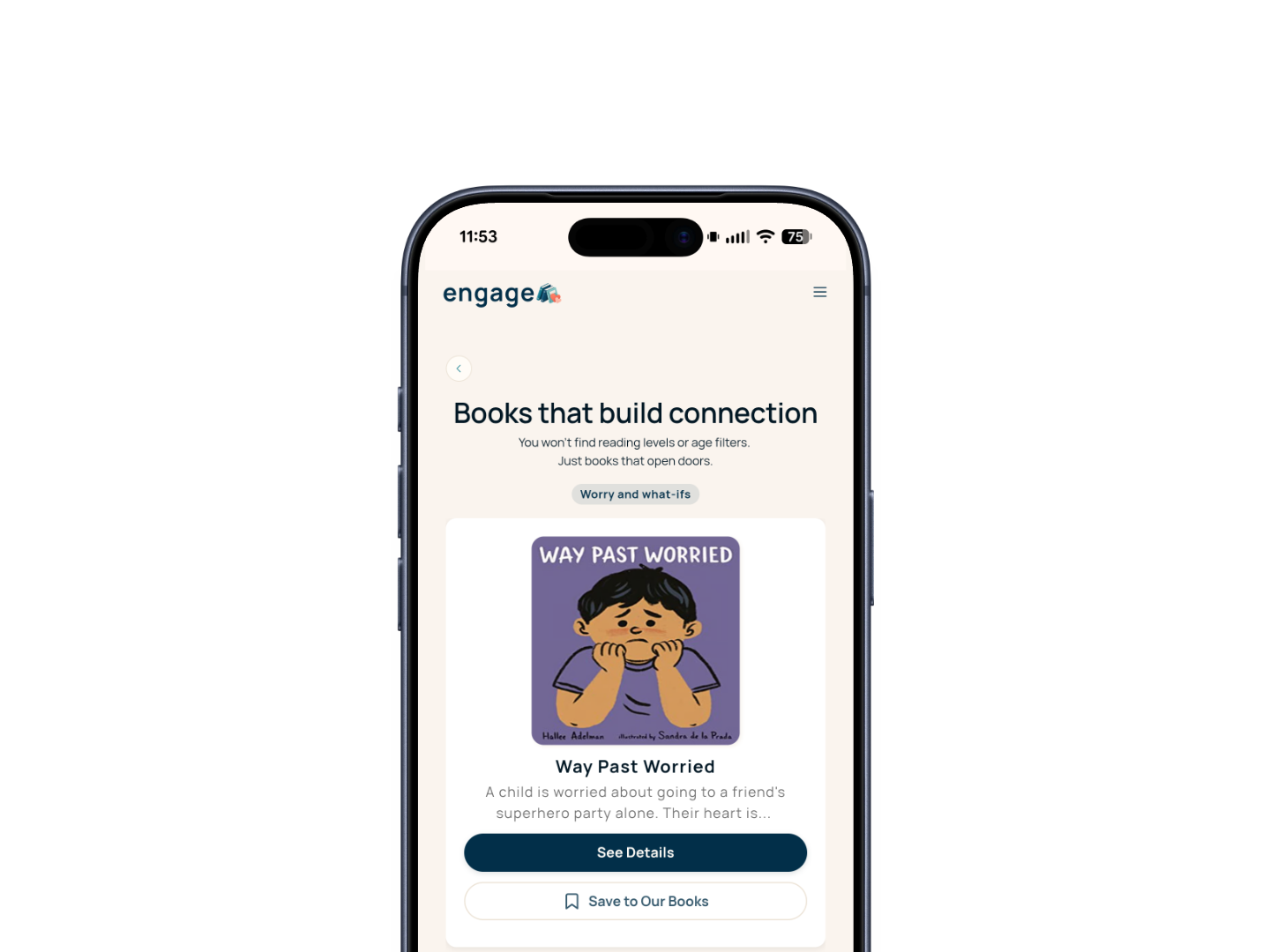
03Open a book
Browse the results and tap “See Details” on the book you want to explore. Here, it’s Way Past Worried.
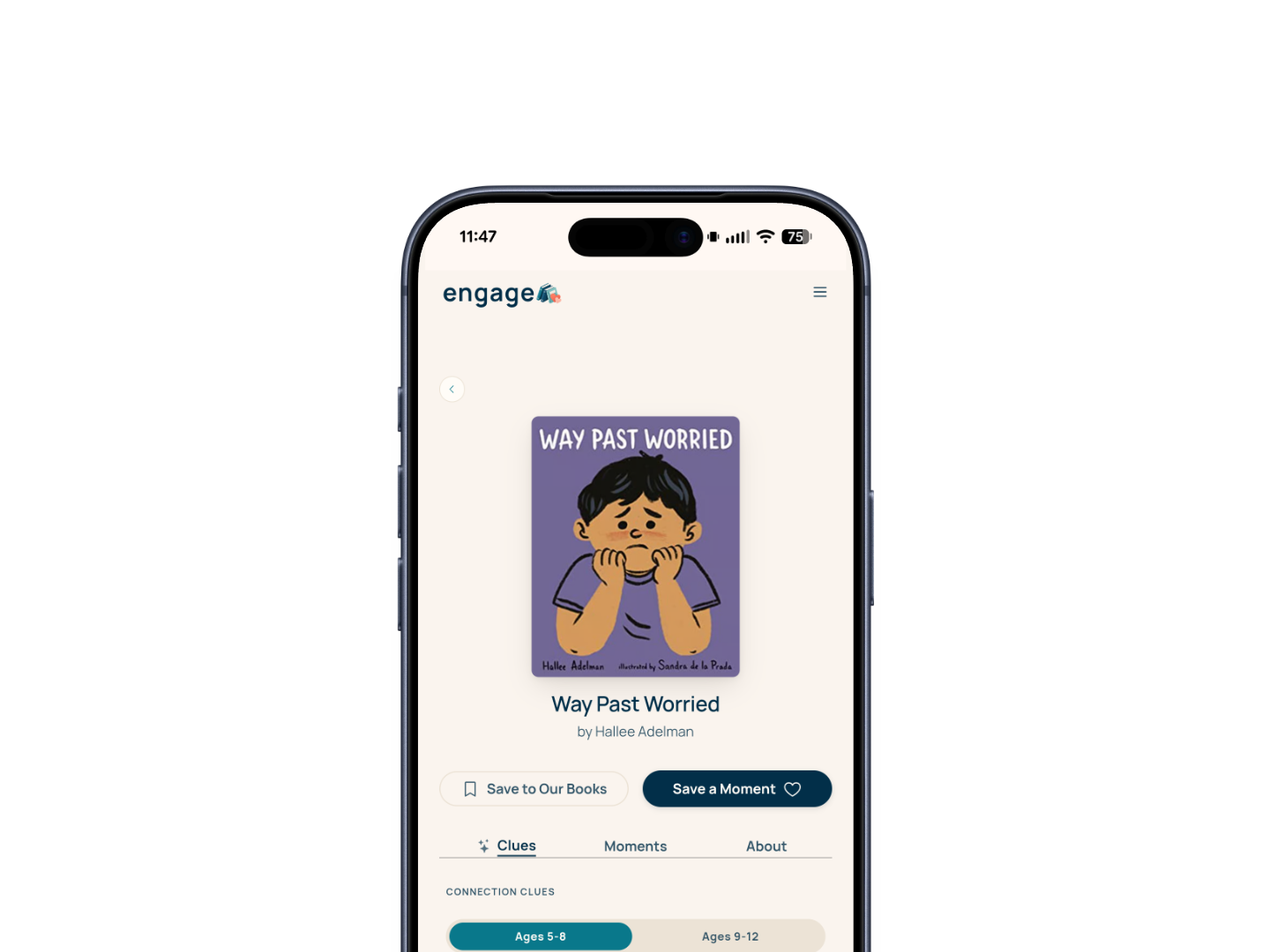
04Find its Connection Clues
On the book page, open “Clues” and choose the age band that fits your child. That’s where you’ll find the book-specific guidance.
Sign up for ENGAGE to find guidance for reading a book together.
Sign up for ENGAGE14 days free, then $6.99/month at the founding price. No card required for the trial. Works in your browser.