
Books About Grief for KidsIncluding books for losing a pet.
Ida, Always, The Memory Box, The Tenth Good Thing About Barney, and The Goodbye Book offer different accounts of loss. Read the book yourself first, then let your child choose how much of it to read together.
Try ENGAGE See the books ↓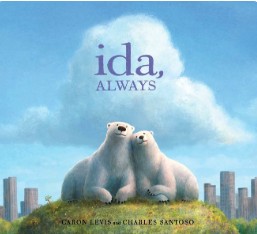
4 picture books.
Read at your child’s pace.
4 books to read together
These books about grief for kids include the death of a friend, remembering a person who died, and the loss of a pet. They differ in length, pictures, and how directly they discuss death. Choose the account that fits your family and your child’s questions.
Reading To Connect is for family reading: a caregiver and a child, reading one book together. We don’t set an age limit on that. We list the publisher’s suggested ages so you can see the range, but you know your child best. Choose the book that fits the child in front of you.
Tap a title to read more.
| Book | What the story includes | Ages (publisher) |
|---|---|---|
| Ida, Always | Illness, death, and missing a friend | 4 to 8 |
| The Memory Box: A Book About Grief | Remembering someone who died | 4 to 8 |
| The Tenth Good Thing About Barney | The death of a pet | 6 to 9 |
| The Goodbye Book | Missing someone and changing feelings | 3 to 6 |
Ida, Always
Gus and Ida are polar bears who spend their days together. When Ida becomes seriously ill and dies, Gus misses her and remembers their time together. Read it yourself first so you know how the story handles illness and death.
Look at their everyday activities, not only the goodbye. Your child might want to spend longer with a picture of the bears together. Follow that choice.
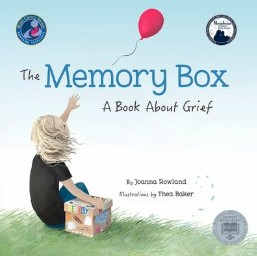
The Memory Box: A Book About Grief
A child worries about forgetting someone who has died and gathers objects and memories in a box. The person who died is not identified as one particular family member.
Notice which objects the child keeps and how they connect to a memory. A box is one idea in a story, not an activity your child must complete.
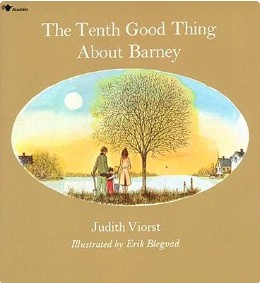
The Tenth Good Thing About Barney
After his cat Barney dies, a boy tries to think of ten good things about him for a funeral. He remembers nine at first. Later, talking with his father, he finds a tenth.
Stay with the boy’s particular memories of Barney. If your child shares a memory of their own pet, listen before adding yours. Do not turn the number ten into an assignment.
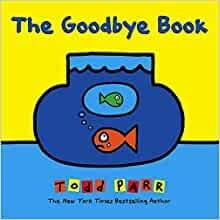
The Goodbye Book
A fish has lost its companion. The short text and bold pictures show different feelings after a goodbye, including uncertainty about what comes next.
Let your child look at the fish’s face and surroundings. They are allowed to disagree with how the fish feels or prefer a different page.
What to notice
Notice whether your child wants to stay with a memory, ask a factual question, or leave the subject for now.
Respond to the words your child uses. Do not decide that a quiet child feels the same way as the character.
Let ordinary details matter too. Your child is allowed to laugh at a picture or talk about something else while you read.
Books for a child who has lost a pet
The Tenth Good Thing About Barney gives the pet a name, habits, and particular memories. The Goodbye Book uses fewer words and follows a fish who is missing a companion. Choose according to the kind of story your child wants, rather than treating one loss as smaller than another.
What not to do
- Do not ask your child to identify with a grieving character.
- Do not require a memory box, a list of memories, or a particular response after reading.
- Do not rush to the reassuring ending when your child wants to stay on another page.
- Do not use the book to set a timetable for missing someone.
What to say
Offer one comment and pause. Your child decides whether to answer, add something else, or keep reading.
“They spent a lot of time together.”
“I’m listening. Tell me the part you want to tell.”
Questions about reading together
Which book specifically includes the death of a pet?
The Tenth Good Thing About Barney follows a boy after his cat dies. The Goodbye Book shows a fish after losing a companion.
Should we finish a book about grief in one sitting?
No. Stop when your child wants to stop. You are free to return to it, choose another book, or put it away.
What if the story’s beliefs differ from ours?
Read it in advance and decide whether it fits. If a difference comes up, explain what your family believes and distinguish that from what a character says.
Who wrote this and how the books were chosen
Quinn Cummings, Certified Family Life Educator (CFLE-P), is the founder of Reading To Connect. She built The ENGAGE Method® to help caregivers notice and respond to their children while reading together. Read about Quinn and her work.
The selection covers remembering someone who died, illness and loss, and the death of a pet. Each title appears in the ENGAGE catalog supplied for this page.
Find guidance for the book you’re reading in ENGAGE
ENGAGE has book-specific guidance for reading together, with ideas for what to say and notice. Your child decides what to share, whether to answer, and when to turn the page.
Type in your book. See its information.
After you sign up, enter your book’s title. If it’s in the ENGAGE catalog, select it to see its information and book-specific guidance. Here’s an example with The Dot.
Try ENGAGE Tap a step to see the screen.01Type in your book
Enter the title in the search field, then select your book from the results.
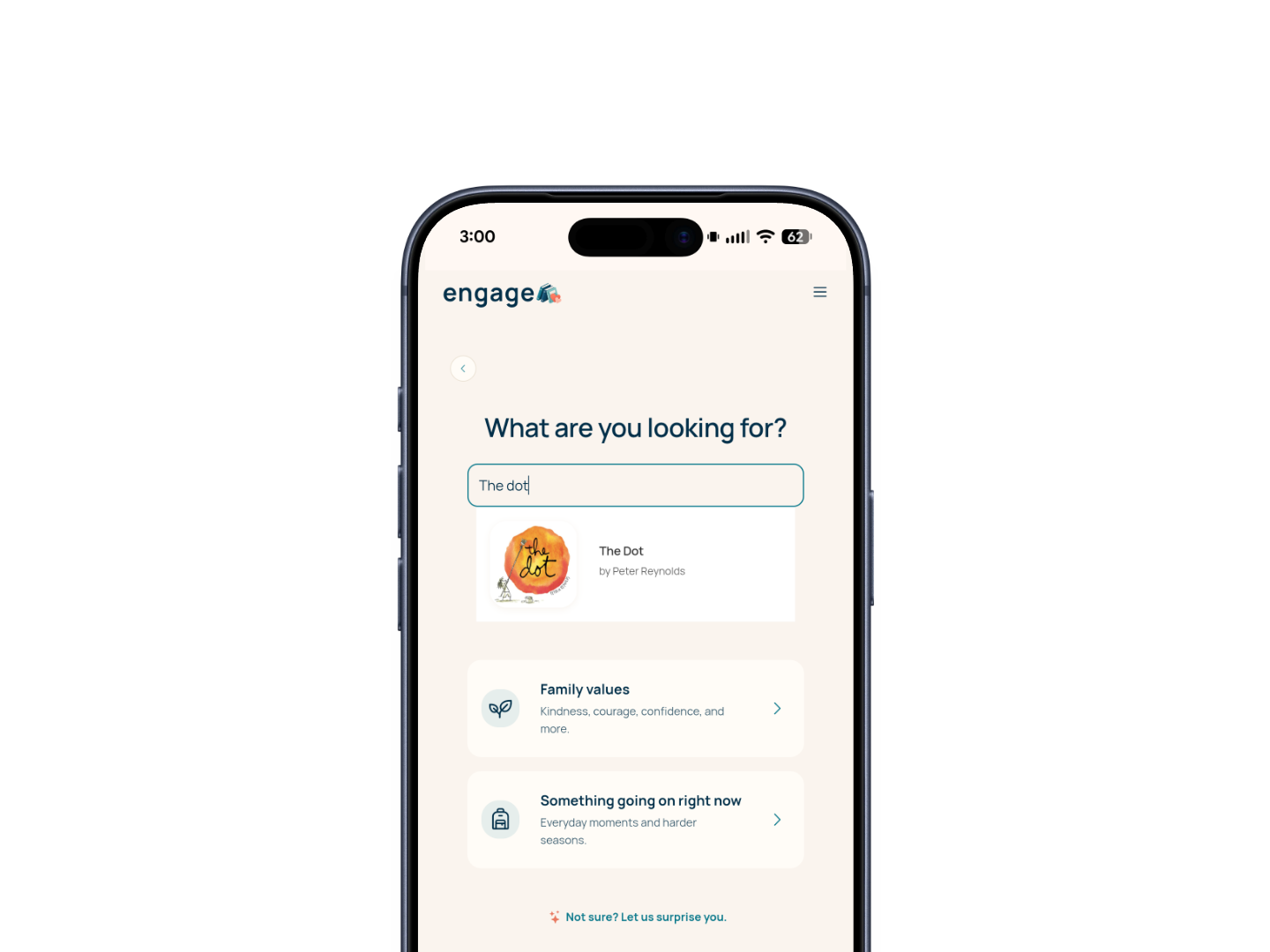
02See your book’s information
Select the book to open its page. Use “About” to see information about the book.
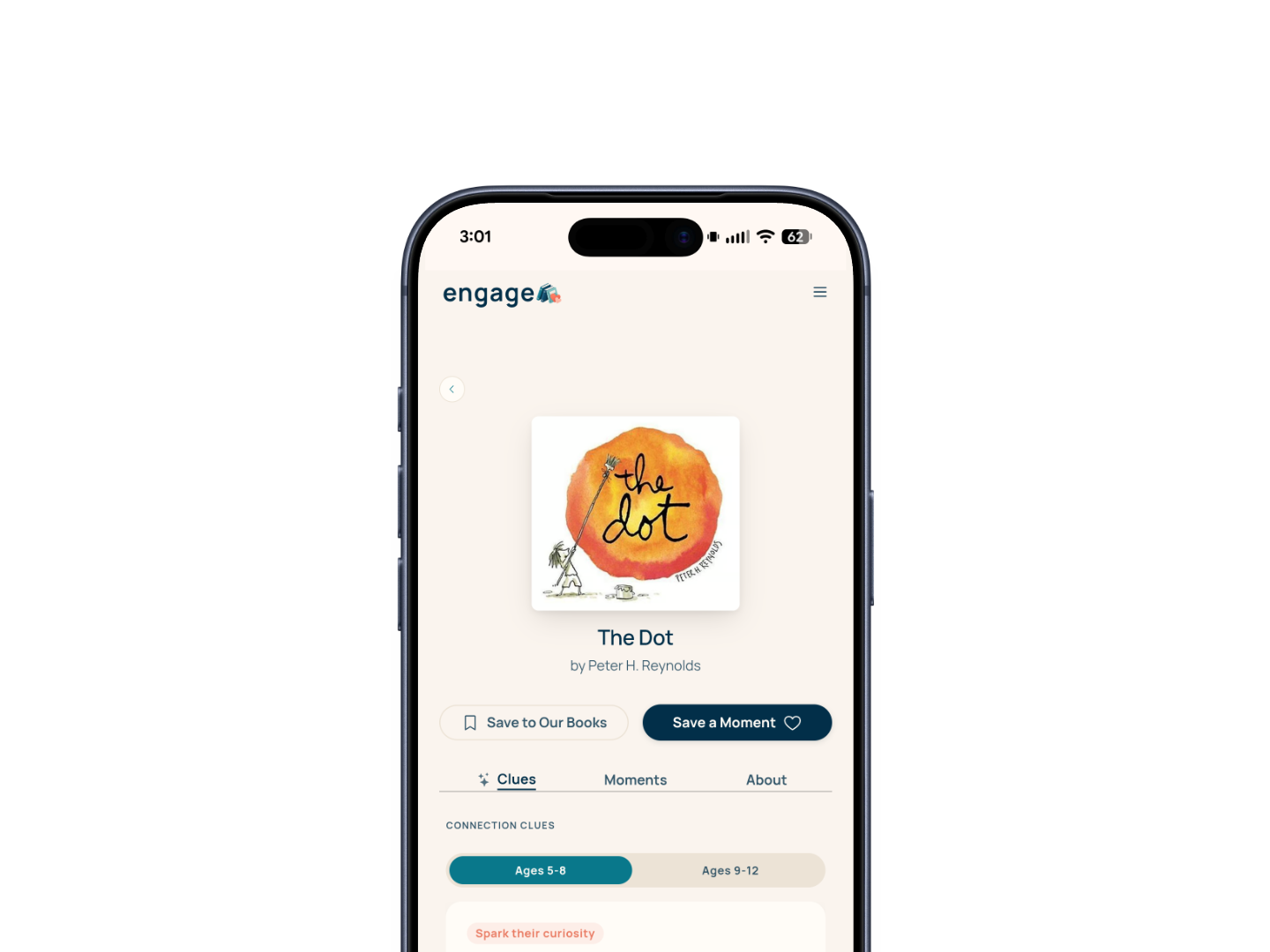
03Find guidance for reading together
Open “Clues” and choose the age band that fits your child. Read the book-specific guidance and choose what fits your time together.
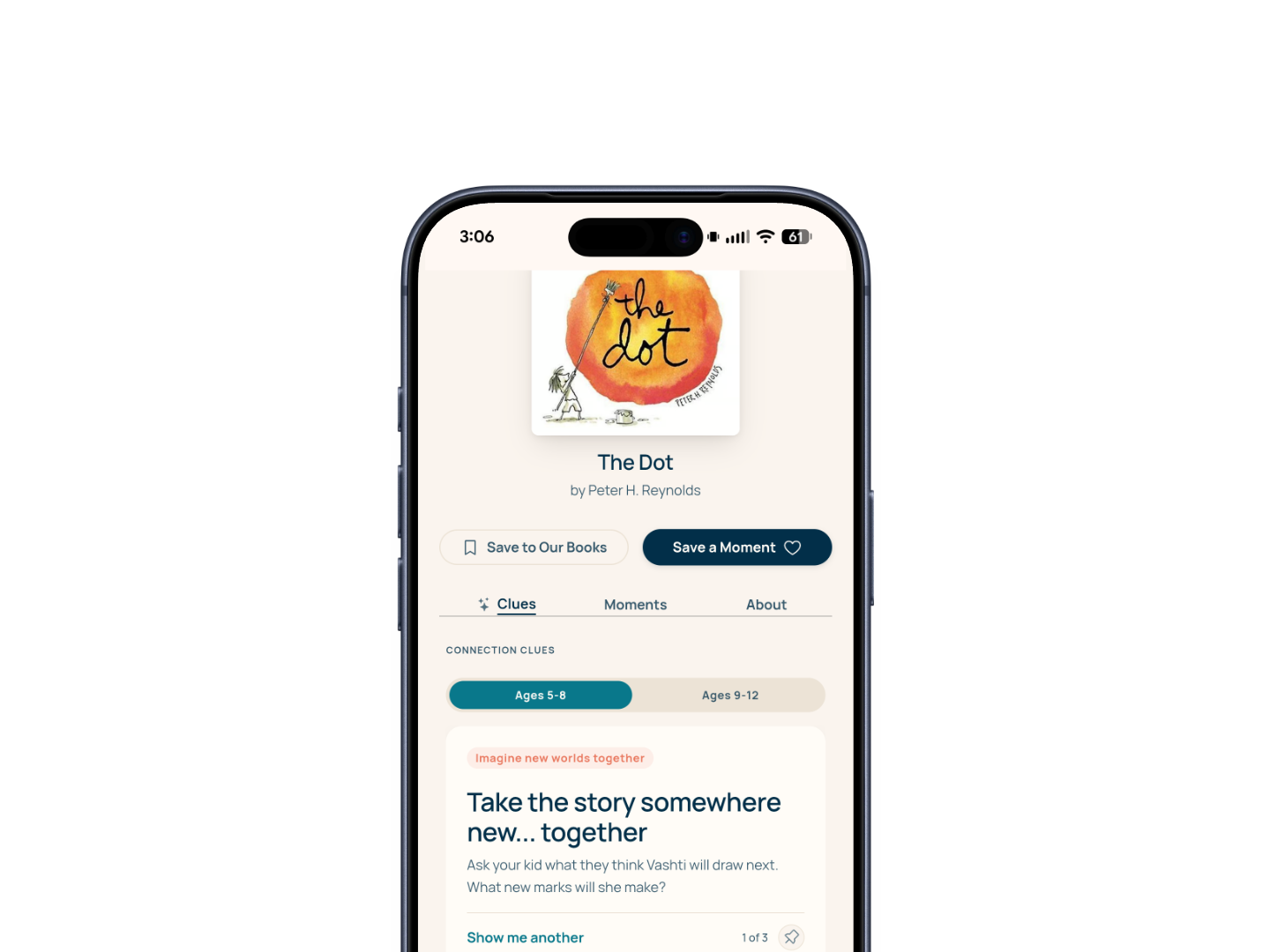
Sign up for ENGAGE to find guidance for reading a book together.
Sign up for ENGAGE14 days free, then $6.99/month at the founding price. No card required for the trial. Works in your browser.