
Dialogic ReadingWhat it is and how ENGAGE is different.
Dialogic reading is a way of sharing picture books in which the child takes an active role in telling the story and the adult listens, asks questions, and builds on what the child says. The ENGAGE Method® focuses on the relationship between the caregiver and child during reading.
Try ENGAGE Read the guide ↓What is dialogic reading?
Dialogic reading is an interactive shared-reading practice developed to support young children’s language and literacy. The adult helps the child become more involved in telling the story instead of only listening to an adult read.
The adult asks about the book, listens to the child’s response, and adds language or detail. For example, if a child says “dog,” an adult might respond, “Yes, the brown dog is running.” This is an illustration of the approach, not a required script.
The What Works Clearinghouse’s early-childhood review describes the adult as an active listener and questioner. Dialogic reading is not inherently a quiz, and responsive practice follows the child’s interest.
How the purposes differ
| Part of reading | Dialogic reading | The ENGAGE Method® |
|---|---|---|
| Main purpose | Support language and literacy through active participation. | Attend to how a caregiver and child respond to each other. |
| Adult’s attention | What the child says about the book and how to extend it. | What interests either person and what the other person chooses to share. |
| An invitation | Ask the child to describe something in a picture. | Share a notice or thought and leave the response open. |
These purposes overlap in practice. Both include listening and responding. The distinction here is what the adult is attending to, not a claim that one approach is better.
The same picture, two examples
Imagine a picture of a child waiting beside a window.
“What is she doing?” If the child says “waiting,” the adult adds, “She is waiting beside the window.”
Imagine a picture of a child waiting beside a window. It brings back a memory, and you share it:
“When I was little, I used to wait by the window for my grandmother. I could recognize her coat before I could see her face.”
Your child might ask, “What did you do together?” You might tell them about playing cards at her kitchen table—or how she always let you choose the first game.
In ENGAGE’s Apply practice, a story offers an opening for your child to know something about your life. You bring your own memories, values, and traditions into the time you share.
This is an imagined example; share a memory that is yours. Your child may ask a question, offer a memory, or simply listen. You can follow what interests them without needing the exchange to become a lesson.
These are examples written for this page. You do not have to ask your child to connect the picture to their own life.
Read more about The ENGAGE Method® or use the questions-to-ask guide for ideas about leaving an answer optional.
What the research does and does not say
The What Works Clearinghouse’s February 2007 early-childhood review found positive effects on oral language and no discernible effects on phonological processing for dialogic reading. Those findings concern the studies and children included in that review. See the review and its limits.
That evidence does not establish results for The ENGAGE Method®. ENGAGE’s description on this page states its purpose and how it is used, not a claim of tested effectiveness.
For family reading, decide what you want to do together today. Read aloud, take turns, look at pictures, or pause on a detail. If a child does not want to answer, continue without requiring one.
For a practical starting point, see how to connect with your child through reading.
Questions about reading together
Does dialogic reading mean asking questions on every page?
No. Its interactive purpose does not require constant interruption. The child’s interest and the flow of the book matter.
Do I have to choose only one approach?
No. You might extend a child’s language in one exchange and share a personal thought in another. Stay clear about whether you are teaching a skill or spending time responding to each other.
Is ENGAGE a replacement for reading instruction?
No. The ENGAGE Method® describes an approach to family reading. It is not a substitute for reading instruction or support for a reading difficulty.
Who wrote this
Quinn Cummings, Certified Family Life Educator (CFLE-P), is the founder of Reading To Connect. She built The ENGAGE Method® to help caregivers notice and respond to their children while reading together. Read about Quinn and her work.
The description of dialogic reading uses the What Works Clearinghouse’s early-childhood review. The comparison explains Reading To Connect’s stated purpose and includes examples written for this page.
Find guidance for the book you’re reading in ENGAGE
ENGAGE has book-specific guidance for reading together, with ideas for what to say and notice. Your child decides what to share, whether to answer, and when to turn the page.
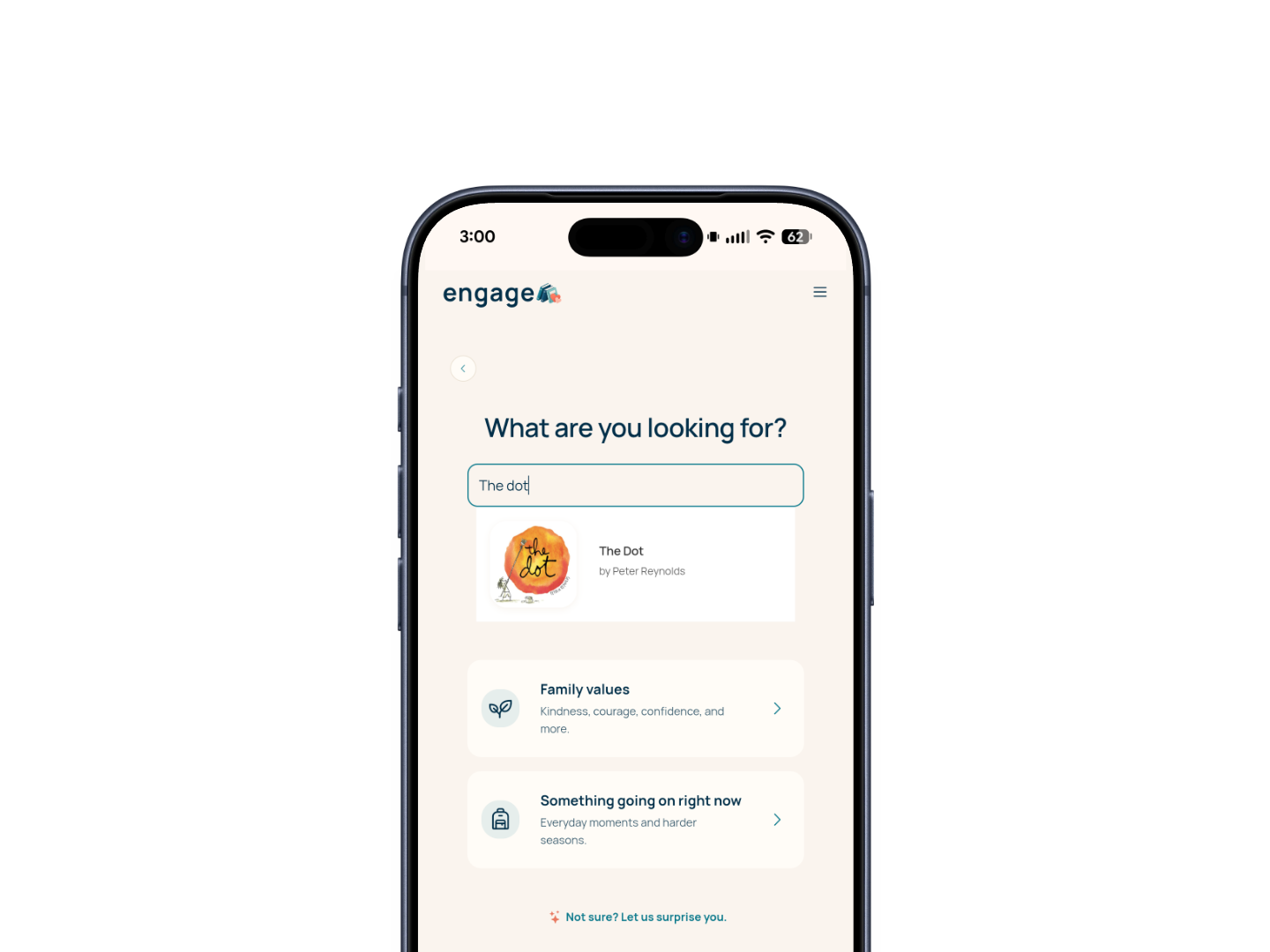
Type in your book. See its information.
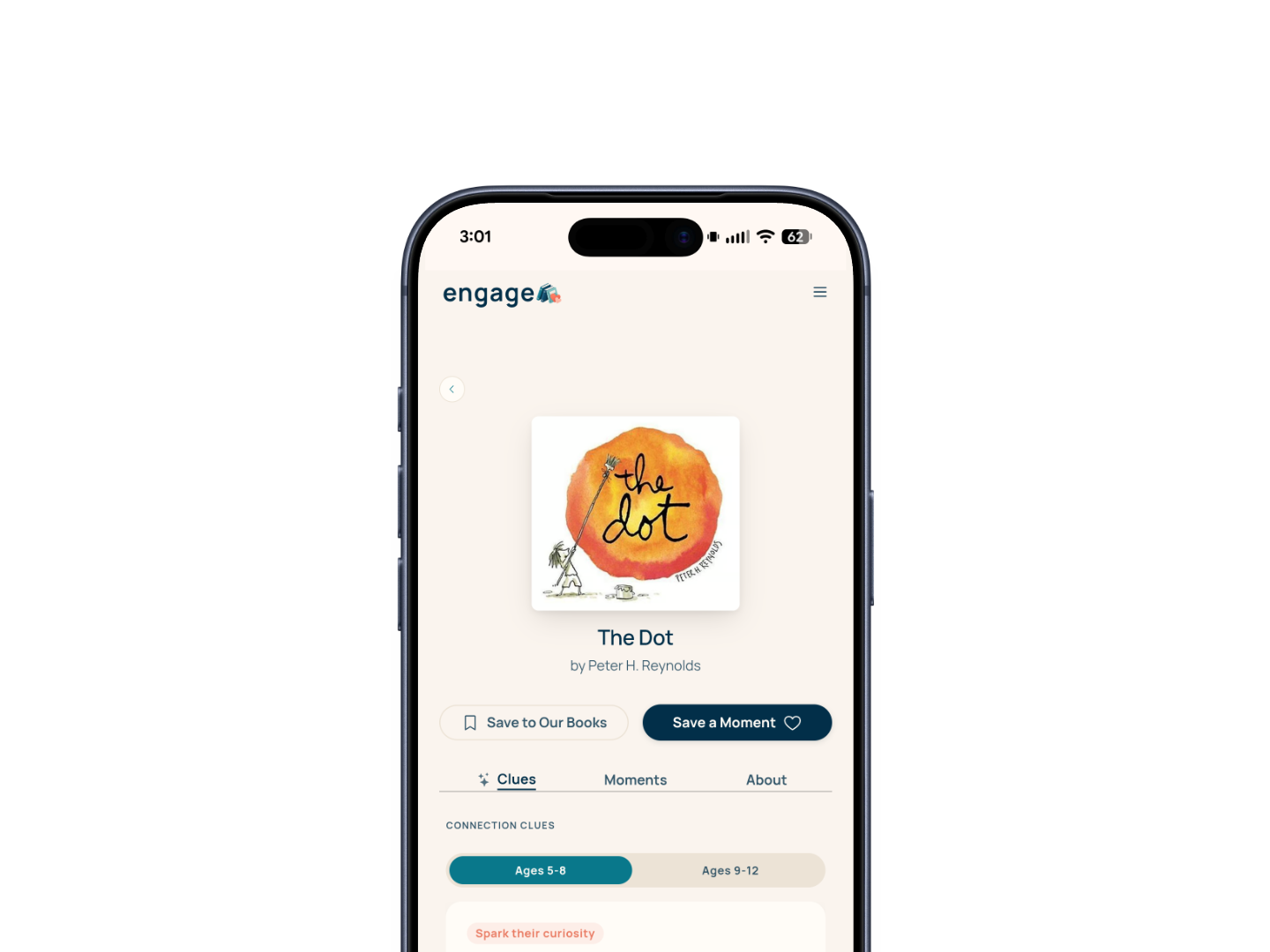
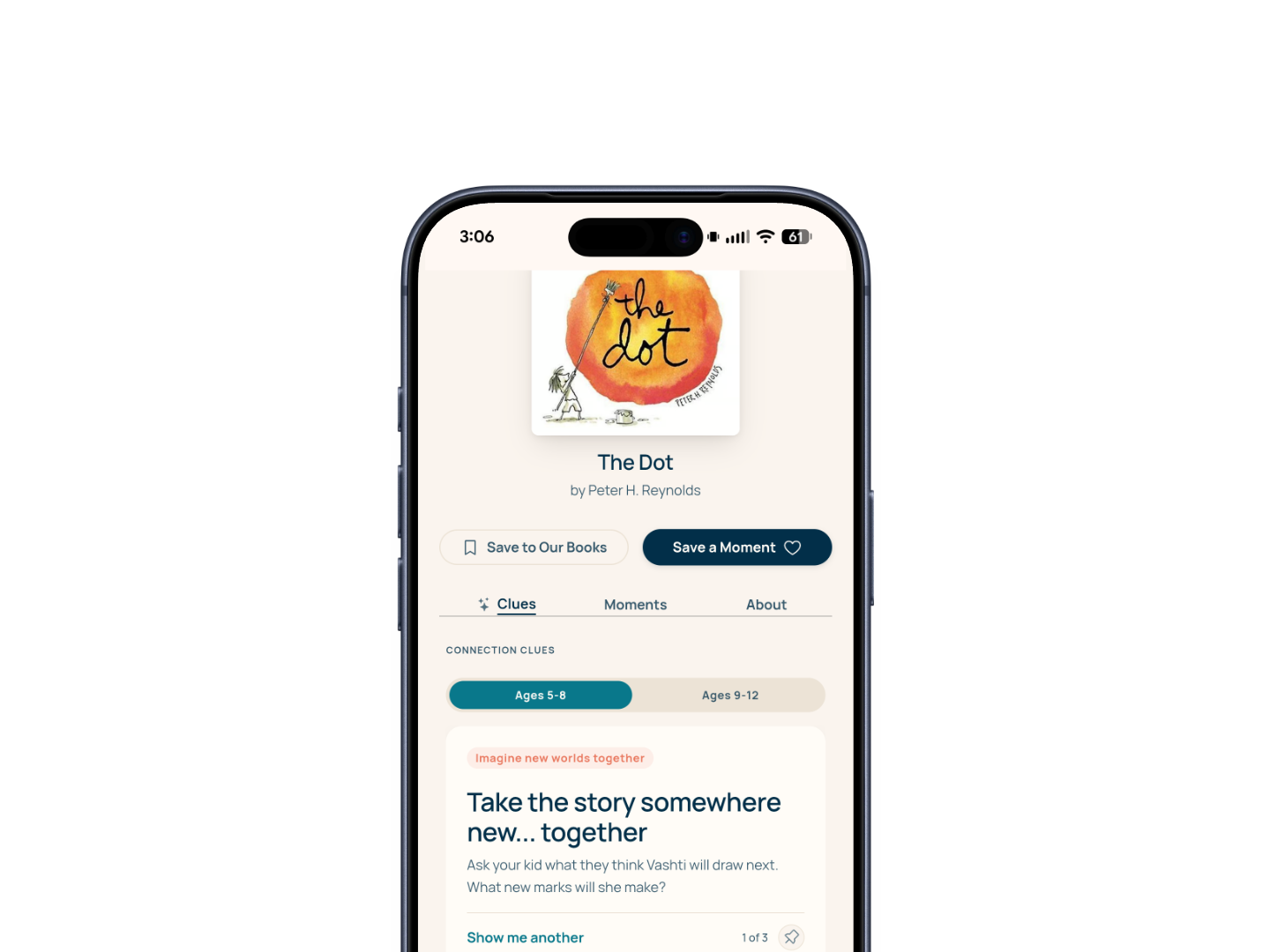
After you sign up, enter your book’s title. If it’s in the ENGAGE catalog, select it to see its information and book-specific guidance. Here’s an example with The Dot.
Try ENGAGE Tap a step to see the screen.01Type in your book
Enter the title in the search field, then select your book from the results.
02See your book’s information
Select the book to open its page. Use “About” to see information about the book.
03Find guidance for reading together
Open “Clues” and choose the age band that fits your child. Read the book-specific guidance and choose what fits your time together.
Sign up for ENGAGE to find guidance for reading a book together.
Sign up for ENGAGE14 days free, then $6.99/month at the founding price. No card required for the trial. Works in your browser.