Skip to content

For organizations that support families

Give families a practical
way to connect.

Workshops, professional learning, and ENGAGE course and app access help the families you serve connect through the books they share.

Three quick questions to get started.

Explore the work
Developed by a CFLE-P

Created by Quinn Cummings, a Certified Family Life Educator (CFLE-P).

Meet Quinn
Research-informed

The approach draws on research about responsive relationships, family stories, shared play, and caregiver–child communication.

Explore the research
Connection-centered

Practical ways for caregivers and children to listen, share, and respond to one another through books.

Explore the approach

Two ways to work together

Learning together.
Support to take home.

01 Live sessions

Workshops &
professional learning

Caregivers practice connecting through books. Your team learns to introduce the approach. Quinn leads sessions shaped around your families and goals.

In person or online.

Let’s plan your session (opens in a new tab)
Quinn Cummings, facilitator of Reading To Connect workshops
Workshops and professional learning with Quinn Cummings, CFLE-P

What this brings to your work

Practical skills.
Everyday connection.

For the families you serve

Know what to try.

  • Choose an approach that fits their child and their energy.
  • Share a memory, notice something, or invite a little play.
  • Follow their child’s response, including a wish to keep reading.

For your organization

Extend the support you offer.

Bring ENGAGE into caregiver education, family workshops, or resources offered between visits.

Your team gains a practical approach to share. Families can keep using it at home with books they have or borrow.

The framework behind the work

The ENGAGE Method® in action.

Six practices guide our teaching and app. Explore what each can look like for a family.

A moment families might share

A caregiver offers two books; the child chooses one. Together, they find a comfortable place to read.

Caregiver + child · Room for both

01 / 06 · Excite

Togetherness

Help caregivers and children find a welcoming way into time together.

Six practices. One shared relationship.

A moment families might share

A character starts at a new school. The caregiver says, “That reminds me of your first day at your new school.”

Caregiver + child · Room for both

02 / 06 · Notice

Feeling Seen

Show a child you notice something about their life.

Six practices. One shared relationship.

A moment families might share

Caregiver and child try different character voices, respond to one another, and make the story their own.

Caregiver + child · Room for both

03 / 06 · Give

Understanding & Attachment

Make room for play, expression, and shared feelings.

Six practices. One shared relationship.

A moment families might share

A caregiver shares a memory the page brings up. The child adds a connection of their own; both stories have room.

Caregiver + child · Room for both

04 / 06 · Apply

Bonding & Closeness

Invite families’ memories, values, and traditions into the story.

Six practices. One shared relationship.

A moment families might share

A caregiver follows an unexpected thought from the child, listens, and reflects on what they learned about one another.

Caregiver + child · Room for both

05 / 06 · Gather

Feeling Heard

Encourage listening that leaves room for each person’s perspective.

Six practices. One shared relationship.

A moment families might share

Caregiver and child imagine different endings and share why they chose them. They can disagree and stay connected.

Caregiver + child · Room for both

06 / 06 · Ending

Empowerment & Legacy Building

Make room for each person’s ideas, even after the book closes.

Six practices. One shared relationship.

Families & professionals

What stayed with them.

Review of the ENGAGE course for families

“I read a lot of parenting books, and I often end up feeling inadequate and like achieving ‘good’ parenting is impossible. Not with this!”

Cristin M.

Parent · Course participant · Now a lifetime ENGAGE app member

Read more from Cristin

“I could see this course being a wonderful tool for teachers and other professionals who work with children as well.”

“I also know I can revisit it over the years and continue to use books as a way to connect, even as they become teens/young adults.”

Review of the ENGAGE course materials

“Your suggestions and modeling for the parents are quite clear and useful.”

Jean Roberts, M.A., Child and Adolescent Psychology
Retired professional · Course materials reviewer

One family’s experience with ENGAGE

One clue opened
a conversation.

An ENGAGE clue for If You Run Out of Words helped Tristen ask what her daughter wanted to hear more often.

“So I looked at the connection clues, and my God, did we connect. … Her responses were ‘you’re tough’ and ‘I love you so much. You’re the best’.

“I almost cried because this made me realize I don’t say it nearly enough.”

Tristen, ENGAGE app parent · Excerpt from her shared family moment
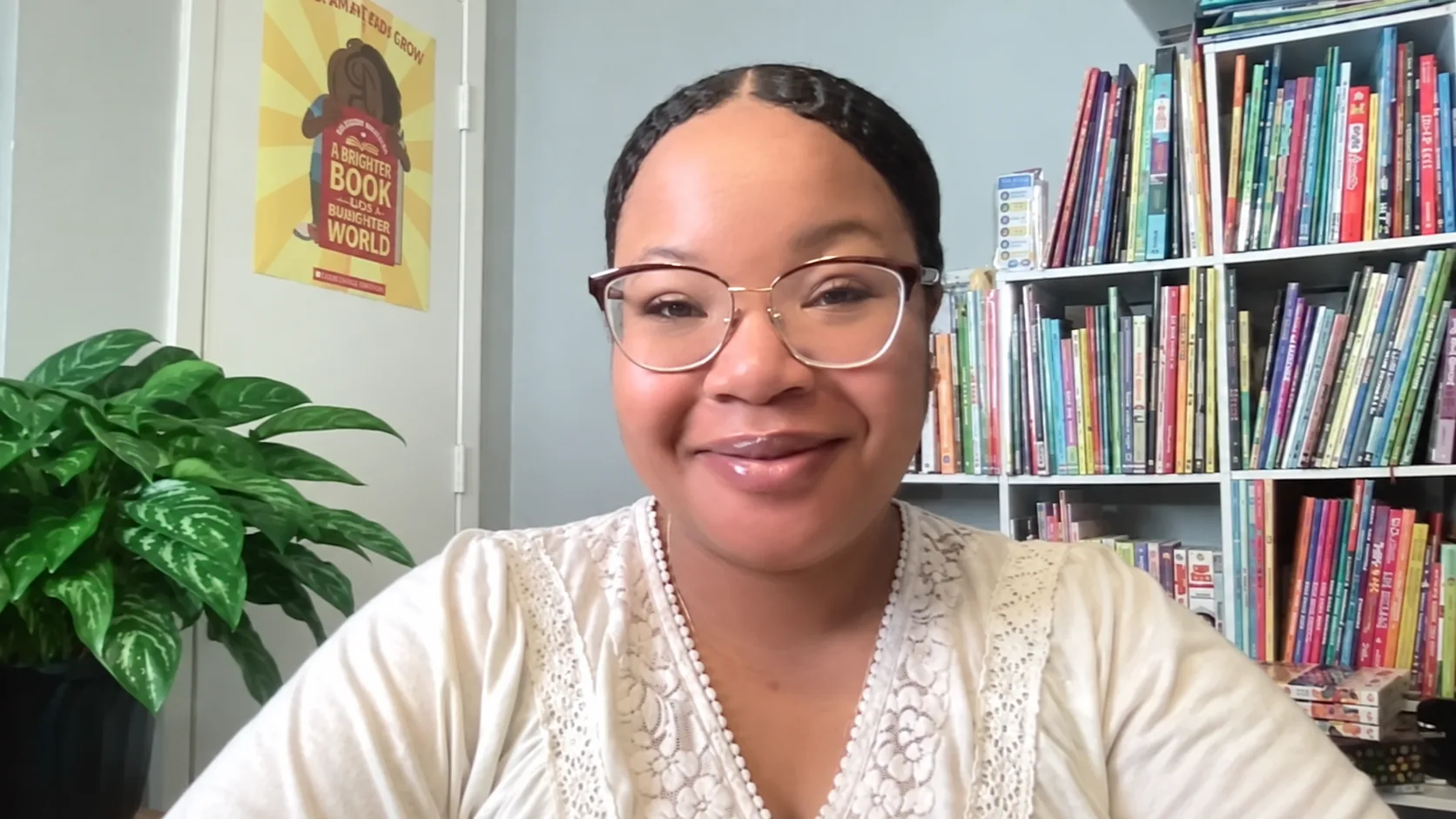
Quinn smiling in her reading room
Quinn CummingsCreator of the ENGAGE Method®

Meet your facilitator

Quinn Cummings, CFLE-P

Certified Family Life Educator (CFLE-P)

Quinn created The ENGAGE Method® and founded Reading To Connect. She helps caregivers put it into practice and works with organizations to shape learning around their families’ strengths, cultures, and everyday lives.

More about Quinn

Before we talk

A few practical questions.

Does this replace reading instruction?

No. ENGAGE focuses on connection through shared reading. It can sit alongside literacy instruction and other family support.

Can we offer course or app access without a live session?

Yes. You can offer course access, app access, or both, with or without a live session.

What should we bring to the first call?

Who you serve, what you hope to support, and any timing needs. An approximate family count helps; a finished plan isn’t needed.

What is the evidence behind ENGAGE?

ENGAGE draws on relational research and family life education. The family accounts here describe individual experiences; they are not a controlled evaluation of the method. We can discuss the research and learning goals relevant to your organization.

Let’s start with your families

Let’s find what fits
your families.

Tell me who you serve and what you’d like to support. We’ll work out the next step together.

Prefer to talk it through?

Discuss your organization’s needs

Your details are used to respond to your inquiry. Privacy policy

Find the right fit

How could Reading To Connect support your families?

Three quick questions. Options for your organization. No email required.

Ready to talk? Skip the questions and book a call

Excite / Research & practice

A welcoming invitation leaves room for choice.

Self-determination theory identifies autonomy, competence, and relatedness (feeling willing, capable, and connected) as important foundations of motivation.

How ENGAGE puts this into practice

Excite offers a welcoming way into shared reading, with room for caregiver and child to shape the experience together. Each person brings their interests and capacity.

Research foundation

Ryan & Deci (2000). Self-Determination Theory and the Facilitation of Intrinsic Motivation, Social Development, and Well-Being. (PDF, opens in a new tab)

This connection explains the practice’s theoretical grounding; it is not evidence of measured ENGAGE outcomes.

Notice / Research & practice

Being known needs to be felt.

In a study of adults describing a parent or adult sibling, feeling known was associated with relationship satisfaction. Knowing someone and helping them feel known are different things.

How ENGAGE puts this into practice

Notice uses the book to make a caregiver’s knowledge of the child visible. A familiar detail or remembered experience can say, “I pay attention to your life.” The child has room to receive, add to, or correct that connection.

Research foundation

Schroeder & Fishbach (2024). Feeling known predicts relationship satisfaction. (opens in a new tab)

This study concerned adults and measured associations. It did not test Notice or the effects of offering recognition to children.

This research informs the practice; it does not establish measured outcomes of The ENGAGE Method.

Give / Research & practice

Shared expression gives families another way to join in.

Observations of 31 families with children ages 8–12 found that children’s positive expressions were more likely to continue when family members shared positive emotion, touch, or leisure.

How ENGAGE puts this into practice

Give brings the story into shared expression and play. A softer voice, a small movement, or a playful pause can create an opening. Watching and quiet participation belong here, too.

Research foundation

Bai, Repetti, & Sperling (2016). Children’s expressions of positive emotion are sustained by smiling, touching, and playing with parents and siblings. (opens in a new tab)

The study observed everyday family life. It did not establish lasting relationship change or test expressive reading. No particular expression or physical contact is required.

This research informs the practice; it does not establish measured outcomes of The ENGAGE Method.

Apply / Research & practice

Family stories make personal meaning available.

Research on family narratives, values, and rituals examines how families share meaning. In one study of 40 families with children ages 9–12, coordinating perspectives during family storytelling was associated with higher self-esteem among girls; the full-sample finding was weaker.

How ENGAGE puts this into practice

Apply uses a book as an opening for the caregiver to share a true memory, value, or tradition. The child gets to know more about the person and family behind those experiences. Listening can be enough; agreement is not required.

Research foundation

Bohanek, Marin, Fivush, & Duke (2006). Family narrative interaction and children’s sense of self. (opens in a new tab)

These findings do not show that telling a family story causes higher self-esteem. Apply’s proposed contribution to shared understanding remains an outcome to evaluate.

This research informs the practice; it does not establish measured outcomes of The ENGAGE Method.

Gather / Research & practice

The way an answer is received matters.

In an experiment with 1,001 adolescents ages 13–16, participants watched parent–child disclosure scenarios. Better parental listening increased anticipated feelings of autonomy, connection, and well-being.

How ENGAGE puts this into practice

Gather invites something the caregiver genuinely wants to learn about the child. The opening continues in how the caregiver receives the answer, with room for a different view, a short response, or a choice to keep reading.

Research foundation

Weinstein, Huo, & Itzchakov (2021). Parental listening when adolescents self-disclose: A preregistered experimental study. (opens in a new tab)

The experiment measured responses to videos, not changes in participants’ own families. Applying these findings to younger children and shared reading requires further study.

This research informs the practice; it does not establish measured outcomes of The ENGAGE Method.

Ending Swap / Research & practice

An idea can belong to the child.

A small painting experiment with 44 first- and second-grade children compared controlling limits, informational limits, and no limits. Results largely supported the concern that controlling guidance can undermine motivation and creativity.

How ENGAGE puts this into practice

Ending Swap opens room to imagine a different possibility, create something, or carry an interest beyond the book. Caregiver and child can shape what happens next. An idea can also be complete without becoming an activity.

Research foundation

Koestner, Ryan, Bernieri, & Holt (1984). Setting limits on children’s behavior: The differential effects of controlling vs. informational styles on intrinsic motivation and creativity. (opens in a new tab)

The experiment tested a painting task. It did not test Ending Swap or establish lasting gains in confidence, self-trust, or family connection.

This research informs the practice; it does not establish measured outcomes of The ENGAGE Method.

Beyond Read 20 Minutes professional guide cover

Free professional guide · 15 pages

Beyond
“Read 20 Minutes”

Find language and practical next steps for helping families connect through books without adding more pressure to reading at home.

Excite / Research & practice

A welcoming invitation leaves room for choice.

Self-determination theory identifies autonomy, competence, and relatedness (feeling willing, capable, and connected) as important foundations of motivation.

How ENGAGE puts this into practice

Excite offers a welcoming way into shared reading, with room for caregiver and child to shape the experience together. Each person brings their interests and capacity.

Research foundation

Ryan & Deci (2000). Self-Determination Theory and the Facilitation of Intrinsic Motivation, Social Development, and Well-Being. (PDF, opens in a new tab)

This connection explains the practice’s theoretical grounding; it is not evidence of measured ENGAGE outcomes.

Find the right fit

How could Reading To Connect support your families?

Three quick questions. Options for your organization. No email required.

Ready to talk? Skip the questions and book a call

Photo from Quinn’s work

Notice / Research & practice

Being known needs to be felt.

In a study of adults describing a parent or adult sibling, feeling known was associated with relationship satisfaction. Knowing someone and helping them feel known are different things.

How ENGAGE puts this into practice

Notice uses the book to make a caregiver’s knowledge of the child visible. A familiar detail or remembered experience can say, “I pay attention to your life.” The child has room to receive, add to, or correct that connection.

Research foundation

Schroeder & Fishbach (2024). Feeling known predicts relationship satisfaction. (opens in a new tab)

This study concerned adults and measured associations. It did not test Notice or the effects of offering recognition to children.

This research informs the practice; it does not establish measured outcomes of The ENGAGE Method.

Give / Research & practice

Shared expression gives families another way to join in.

Observations of 31 families with children ages 8–12 found that children’s positive expressions were more likely to continue when family members shared positive emotion, touch, or leisure.

How ENGAGE puts this into practice

Give brings the story into shared expression and play. A softer voice, a small movement, or a playful pause can create an opening. Watching and quiet participation belong here, too.

Research foundation

Bai, Repetti, & Sperling (2016). Children’s expressions of positive emotion are sustained by smiling, touching, and playing with parents and siblings. (opens in a new tab)

The study observed everyday family life. It did not establish lasting relationship change or test expressive reading. No particular expression or physical contact is required.

This research informs the practice; it does not establish measured outcomes of The ENGAGE Method.

Apply / Research & practice

Family stories make personal meaning available.

Research on family narratives, values, and rituals examines how families share meaning. In one study of 40 families with children ages 9–12, coordinating perspectives during family storytelling was associated with higher self-esteem among girls; the full-sample finding was weaker.

How ENGAGE puts this into practice

Apply uses a book as an opening for the caregiver to share a true memory, value, or tradition. The child gets to know more about the person and family behind those experiences. Listening can be enough; agreement is not required.

Research foundation

Bohanek, Marin, Fivush, & Duke (2006). Family narrative interaction and children’s sense of self. (opens in a new tab)

These findings do not show that telling a family story causes higher self-esteem. Apply’s proposed contribution to shared understanding remains an outcome to evaluate.

This research informs the practice; it does not establish measured outcomes of The ENGAGE Method.

Gather / Research & practice

The way an answer is received matters.

In an experiment with 1,001 adolescents ages 13–16, participants watched parent–child disclosure scenarios. Better parental listening increased anticipated feelings of autonomy, connection, and well-being.

How ENGAGE puts this into practice

Gather invites something the caregiver genuinely wants to learn about the child. The opening continues in how the caregiver receives the answer, with room for a different view, a short response, or a choice to keep reading.

Research foundation

Weinstein, Huo, & Itzchakov (2021). Parental listening when adolescents self-disclose: A preregistered experimental study. (opens in a new tab)

The experiment measured responses to videos, not changes in participants’ own families. Applying these findings to younger children and shared reading requires further study.

This research informs the practice; it does not establish measured outcomes of The ENGAGE Method.

Ending Swap / Research & practice

An idea can belong to the child.

A small painting experiment with 44 first- and second-grade children compared controlling limits, informational limits, and no limits. Results largely supported the concern that controlling guidance can undermine motivation and creativity.

How ENGAGE puts this into practice

Ending Swap opens room to imagine a different possibility, create something, or carry an interest beyond the book. Caregiver and child can shape what happens next. An idea can also be complete without becoming an activity.

Research foundation

Koestner, Ryan, Bernieri, & Holt (1984). Setting limits on children’s behavior: The differential effects of controlling vs. informational styles on intrinsic motivation and creativity. (opens in a new tab)

The experiment tested a painting task. It did not test Ending Swap or establish lasting gains in confidence, self-trust, or family connection.

This research informs the practice; it does not establish measured outcomes of The ENGAGE Method.