Live sessions
Learning
that starts here.
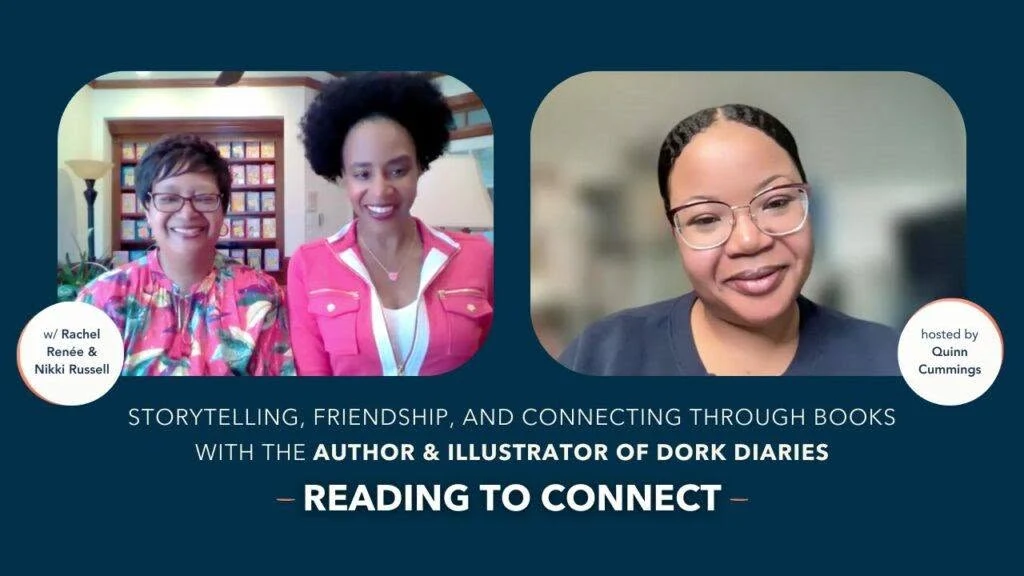
Bring Quinn into the room. Practical sessions help adults notice, listen, and connect through books.
- In-person workshops
- Webinars
- Virtual presentations

For organizations that support families
Workshops, virtual sessions, course access, and an app to help the families you serve connect through reading.
Answer three quick questions about your organization.
Created by Quinn Cummings, a Certified Family Life Educator (Provisional).
Meet QuinnExplore the ideas and research that inform the framework, alongside practical examples for families.
Explore the frameworkCourse materials reviewed by a professional with an M.A. in Child and Adolescent Psychology, with support for the work from a speech-language pathologist.
Read professional feedbackComplements literacy instruction while focusing on how caregivers and children listen, share, and respond to one another.
See a reading invitationTwo ways to work together
Live sessions
Bring Quinn into the room. Practical sessions help adults notice, listen, and connect through books.
Course + app access
The course teaches the approach. Caregivers learn how to use The ENGAGE Method to connect through reading.
The app supports the moment. Families get guidance tied to the book in their hands.
Explore access for your families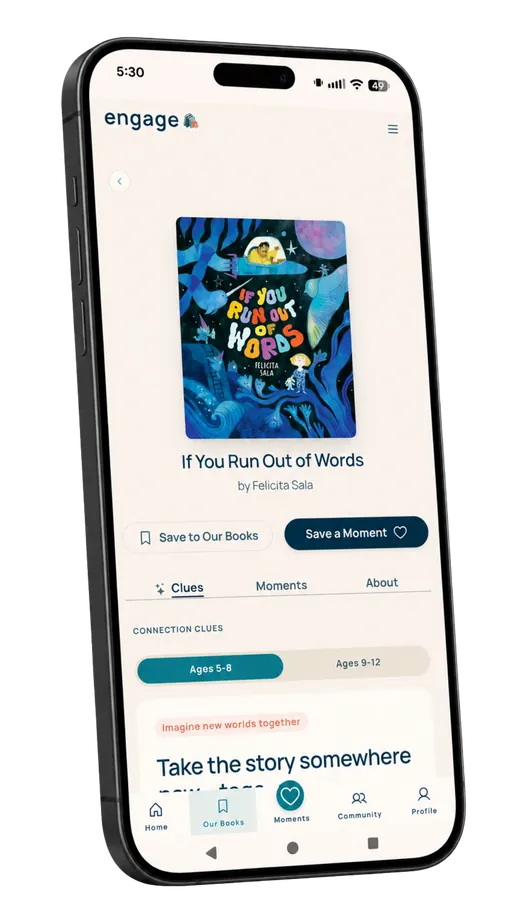
Offer a live session, family course access, app access, or bring them together.
The framework behind the work
Six practices give families different ways to connect through a book. Move through ENGAGE from cover to close, or step into the practice that fits the moment.
A moment families might share
A caregiver offers two books; the child chooses one. Together, they find a comfortable place to read.
Caregiver + child · Room for both
01 / 06 · Excite
Help caregivers and children find a welcoming way into time together.
A moment families might share
A character starts at a new school. The caregiver says, “That reminds me of your first day at your new school.”
Caregiver + child · Room for both
02 / 06 · Notice
Use the book to show a child that you notice something about their life, giving them an opportunity to feel seen.
A moment families might share
Caregiver and child try different character voices, respond to one another, and make the story their own.
Caregiver + child · Room for both
03 / 06 · Give
Make room for play, expression, and shared feelings.
A moment families might share
A caregiver shares a memory the page brings up. The child adds a connection of their own; both stories have room.
Caregiver + child · Room for both
04 / 06 · Apply
Invite families’ memories, values, and traditions into the story.
A moment families might share
A caregiver follows an unexpected thought from the child, listens, and reflects on what they learned about one another.
Caregiver + child · Room for both
05 / 06 · Gather
Encourage listening that leaves room for each person’s perspective.
A moment families might share
Caregiver and child imagine different endings and share why they chose them. They can disagree and stay connected.
Caregiver + child · Room for both
06 / 06 · Ending
Make room for each person’s ideas, even after the book closes.
Each practice gives caregivers and children another way to connect.
Explore the family experience
Choose a cover to see an invitation a caregiver could use. These examples show the guidance available to families.
Sample invitation for caregivers · Ages 5–8
"Before you open the book, ask your kid what they think a 'Wild Thing' might be."
This is the kind of guidance families can use at home. There is room to respond, share a different thought, or keep reading.
Sample invitation for caregivers · Ages 5–8
"Does Nana remind your kid of anyone special in our family? Share who she reminds you of first."
This is the kind of guidance families can use at home. There is room to respond, share a different thought, or keep reading.
Sample invitation for caregivers · Ages 5–8
"Read the 'Goodnight' lines in a very soft, sleepy voice. Let your kid take a turn saying them too."
This is the kind of guidance families can use at home. There is room to respond, share a different thought, or keep reading.
Sample invitation for caregivers · Ages 5–8
"When the family gathers for their Sunday meal, share one of our own family traditions. Ask your kid what they like about it."
This is the kind of guidance families can use at home. There is room to respond, share a different thought, or keep reading.
Sample invitation for caregivers · Ages 5–8
"Ask your kid what they would do if a new kid like Maya came to their class."
This is the kind of guidance families can use at home. There is room to respond, share a different thought, or keep reading.
Sample invitation for caregivers · Ages 5–8
"Ask your kid what other colors Harold might use if he had more crayons."
This is the kind of guidance families can use at home. There is room to respond, share a different thought, or keep reading.
Families & professionals
Reflections on the course, the materials, and reading together.
Review of the ENGAGE course for families
“I read a lot of parenting books, and I often end up feeling inadequate and like achieving ‘good’ parenting is impossible. Not with this!”
Cristin M.
Parent · Course participant · Now a lifetime ENGAGE app member
“I could see this course being a wonderful tool for teachers and other professionals who work with children as well.”
“I also know I can revisit it over the years and continue to use books as a way to connect, even as they become teens/young adults.”
A speech-language pathologist’s perspective
“ENGAGE does what countless literacy programs don't—it helps parents create connection that drives language development and confidence.”
Shenee Omuso, MAT, MA, CCC-SLP
Speech Language Pathologist · 22 years of experience
From the Reading Connection Challenge
“…this morning she didn’t cry, so I’m wondering if that helped”
A participating parent
Reading-challenge participant · Now a lifetime ENGAGE app member
The parent and child read about a character who wanted to stay with their uncle at daycare drop-off. They talked about how the story related to the child’s own experience.
The next morning, the parent noticed a change and wondered whether their talk had helped. This is one parent’s observation, not a measured outcome of the app.
Review of the ENGAGE course materials
“Your suggestions and modeling for the parents are quite clear and useful.”
Jean Roberts, M.A., Child and Adolescent Psychology
Retired professional · Course materials reviewer
What this makes possible
Parents want to connect with their children. Knowing what to say, or how to make room for what comes next, can be harder. Quinn makes those possibilities practical through shared reading.
For parents & caregivers
Learn ways to start talking, share your own experiences, and notice what matters to your child. Guidance leaves room for your energy, your family’s voice, and the way your child responds.
Both of you have something to bring and something to discover about each other.
For professionals & teams
Go beyond recommending that families read together. Quinn helps you show caregivers how a book can open space for listening, shared stories, and play.
Bring practical family life education into your work, with guidance families can return to at home.
One family’s experience with the ENGAGE app
While reading If You Run Out of Words, a connection clue helped Tristen ask her daughter what she wanted to hear more often from her parents.
“So I looked at the connection clues, and my God, did we connect. … Her responses were ‘you’re tough’ and ‘I love you so much. You’re the best’.
“I almost cried because this made me realize I don’t say it nearly enough.”
Meet your facilitator
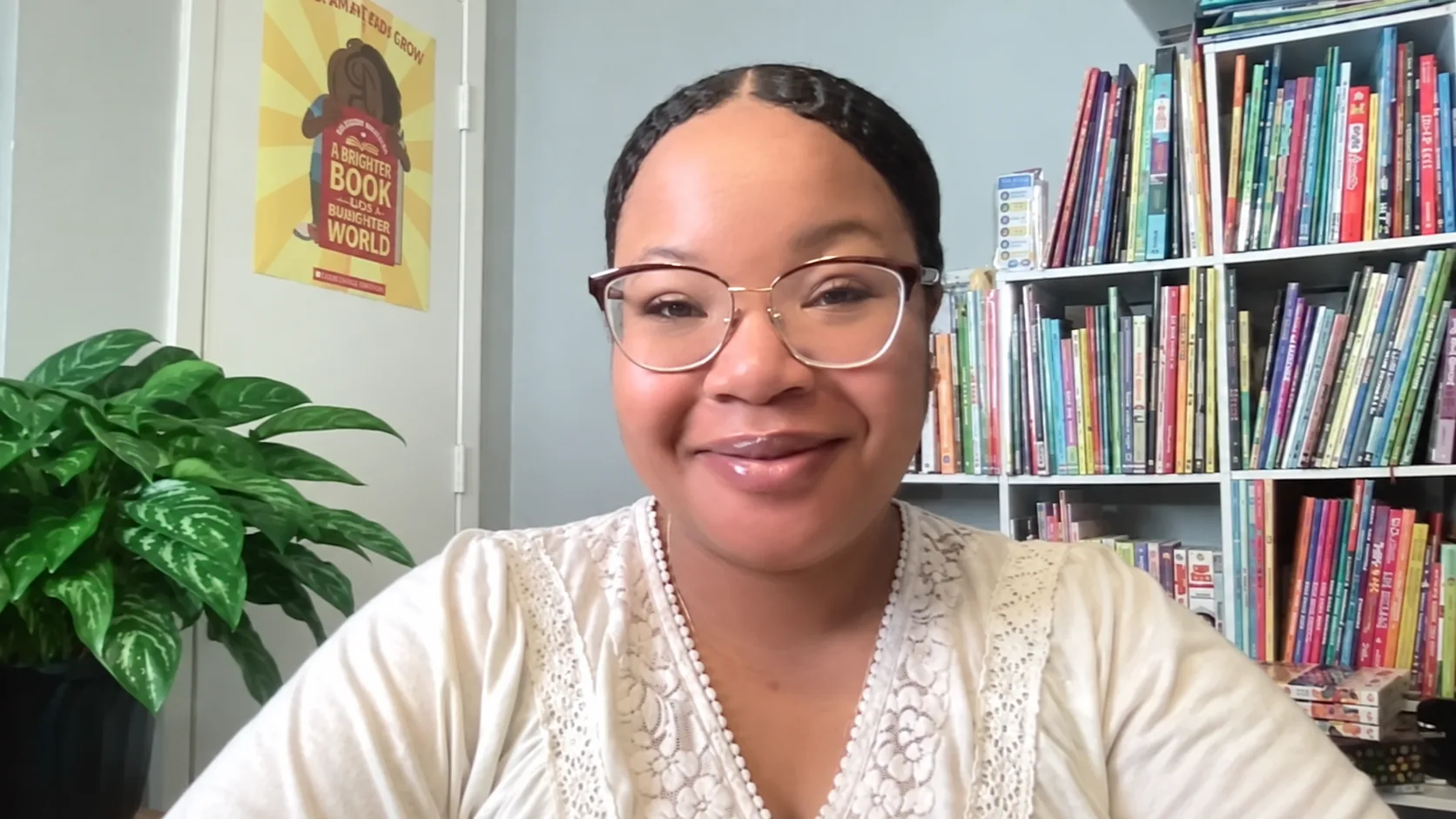
Certified Family Life Educator · Provisional
Founder of Reading To Connect and creator of The ENGAGE Method®. Quinn brings family life education into shared reading to support both caregiver and child and strengthen their relationship.
She helps families find ways to listen, share, and enjoy one another, with guidance that respects their strengths, experiences, and everyday capacity.
“But now I realize we could’ve gone deeper. And that my voice mattered.”
Parent, Reading To Connect podcast listener
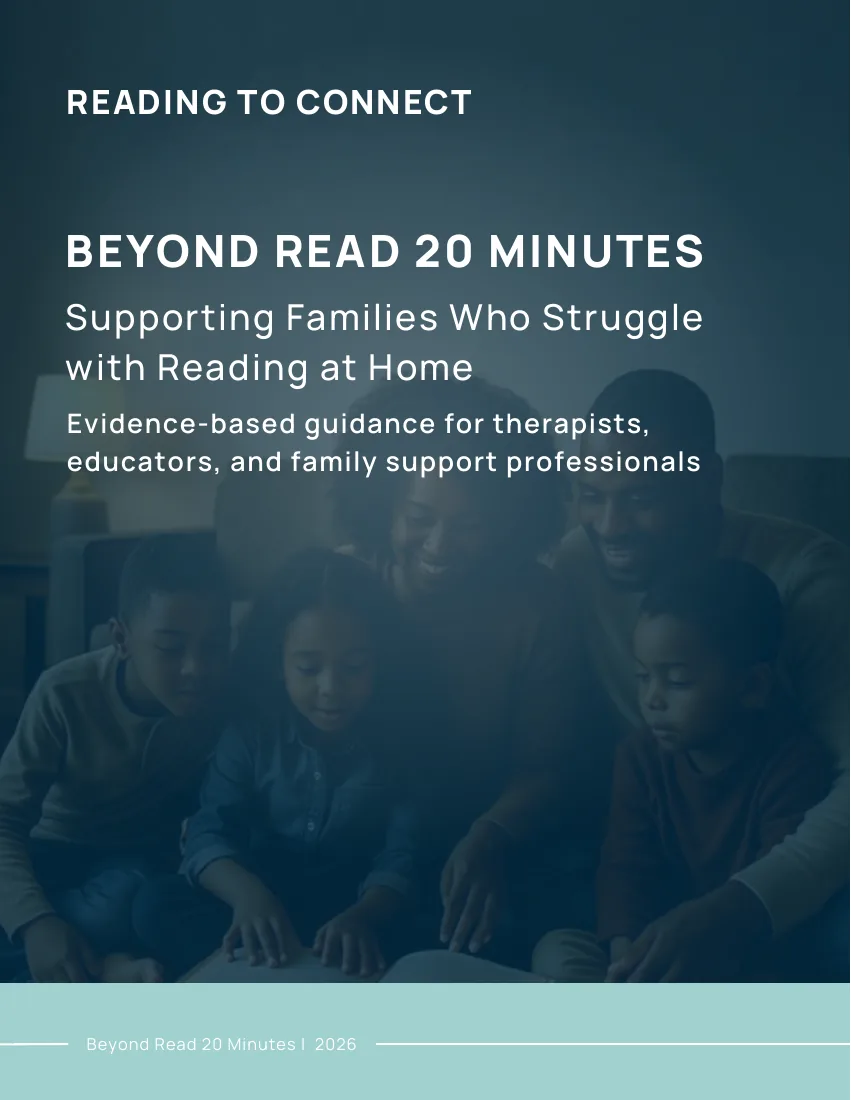
Excerpt from the Professional Guide
A resource for the families beside you
Give families a reason to read that begins with the connection they want.
Find language and practical next steps for helping families connect through books without adding more pressure to reading at home.
Before we talk
You don’t need a finished plan to reach out.
No. ENGAGE complements literacy instruction by giving families another reason to gather around a book: connection.
Parents want to know their children and spend real time together. We show them how reading can make room for that through talking, play, and stories of their own. The purpose is to make reading a time both caregiver and child can want to return to.
Yes. Organizations can purchase family course access, app access, or both. The course teaches caregivers how to use ENGAGE; the app offers guidance for the book in their hands. A live session can be added for shared learning.
Tell Quinn who you serve, what you’re noticing, and what you hope to support. An approximate family count and any timing needs are helpful. The format can be worked out together.
Let’s start with your families
Tell me who you serve. We’ll start there.
Discuss your organization’s needs