
How to Connect With Your Child Through ReadingNotice what interests them. Share something of yourself.
If you want to connect with your child through reading, start with what happens between you while the book is open: what they notice, what you share, and how you respond to each other.
Try ENGAGE Read the guide ↓How to connect with your child while you read
Read a book together, pay attention to what interests your child, and respond to what they offer. Share your own thoughts too. Let their response affect what you do next.
That might mean rereading a funny line, listening to an objection, or admitting that you hadn’t noticed a detail. The book gives you something to look at together. You do not have to make your child explain themselves for the reading to be worth your time.
- Offer a choice you are ready to accept. Choose between two books, decide who reads, or ask whether now is a good time.
- Read until something catches someone’s attention. There is no need to stop on every page.
- Respond to that detail. Laugh, comment, listen, or ask one question you want to hear answered.
- Let the response guide what happens next. Stay on the page, keep reading, or stop.
Reading To Connect is for family reading: a caregiver and a child, reading one book together. We don’t set an age limit on that. Reading aloud, sharing a comic, and taking turns with a chapter all belong here.
Respond to what your child notices
Your child may be interested in something different from what you expected. You chose a book about starting school; they want to discuss the dog in the background. Start with the dog. A topic you hoped to discuss does not have to take over the story.
For example, your child says: “That dog is in every picture.”
You respond: “I missed him on this page. Show me where you found him.”
Look together. Let your child point, explain, or turn the page.
If your child disagrees with your reading of a character, hear their version before defending yours. “I saw it differently” leaves you both room to speak. Agreement is not required.
Stay with what you actually know
Pointing, silence, and laughter do not tell you exactly what your child feels. Describe what you saw rather than deciding what it means. “You went back to that picture” is different from “You’re worried about that too.”
A familiar detail also gives you a chance to recognize something real about your child: a favorite animal, a place they know, or a hobby they enjoy. Let them correct the comparison.
Bring yourself into the reading too
You are part of the reading, not only the person asking questions. Share what you enjoy, what surprises you, or a memory the book brings to mind. Keep it connected to what is on the page.
Offer a memory, not a lesson
If a story includes a family meal, you might mention a meal you remember from childhood. Tell the part you want your child to know. Skip the instruction about what they should learn from it. Your child is free to listen without offering a memory in return.
From my own experience
I learned about my mother by reading the novels she left around the house. Books gave me a way to know something about her. In Apply, part of The ENGAGE Method®, I invite caregivers to share a memory, value or tradition the book brings to mind. Your child has a chance to know the person reading with them, and you can listen to what they make of what you share.
Let the story be funny
Join a laugh, try a quieter voice, or let your child supply a sound. If they ask you to read normally, do that. You do not need to act out the whole book.
For example, Scaredy Squirrel at Night includes elaborate plans to stay awake. Enjoying the plans and pictures together is a reason to read it. Bedtime fears do not have to become the subject.
Be willing to change your mind
When your child points out something you missed, say so. “I hadn’t thought about that part” tells them you heard their idea. Keep your response honest. You do not have to agree with every opinion.
This is part of the purpose behind The ENGAGE Method®: caregivers participate, share, and listen while children retain a choice in how they take part.
When reading does not go as you expected
When your child does not want to talk
Keep reading if they want to listen. Let them point, use their usual way of communicating, or say nothing. Do not require an explanation, eye contact, or a spoken answer.
When your child wants a different book
Ask what they would rather read. If you need to stop for the night, say that clearly. Respecting a choice does not mean the adult has no limits.
When you have been correcting or questioning too much
Name what happened: “I’ve been asking a lot of questions. I’m going to read for a while.” Then do that. Avoid asking your child to reassure you.
When you are tired
Read a few pages, look at the pictures together, or choose a shorter book. You do not need extra voices or a planned activity. Tell your child when you need to stop.
Questions parents ask
What if my child already reads independently?
Invite them to share a passage, comic, or chapter they choose. Offer to read aloud or listen while they read. Do not assume that independent reading means they no longer want to share a book.
Do I need a book about the issue my child is facing?
No. Start with a book your child wants to read. A book about a particular situation is an option, but it does not require your child to discuss their own experience.
How do I know whether my child felt connected?
Do not decide from one laugh, answer, or quiet evening. Attend to what your child tells you and the choices they make. If you ask about the reading, accept their answer, including that they wanted something different.
Who wrote this
Quinn Cummings, Certified Family Life Educator (CFLE-P), is the founder of Reading To Connect. She built The ENGAGE Method® to help caregivers notice and respond to their children while reading together. Read about Quinn and her work.
The examples on this page are suggestions for family reading. They are not a test of your child or a list to complete.
How to cite this guide
Cummings, Quinn. “How to Connect With Your Child Through Reading.” Reading To Connect. Updated October 20, 2026.
Suggested attribution (paraphrase): Quinn Cummings, CFLE-P, founder of Reading To Connect and creator of The ENGAGE Method®, describes shared reading as an opportunity for children to learn about their caregivers as well as for caregivers to learn about children.
Link to this guide when using that paraphrase. If quoting directly, use the exact words from the passage you quote.
Find guidance for the book you’re reading in ENGAGE
ENGAGE has book-specific guidance for reading together, with ideas for what to say and notice. Your child decides what to share, whether to answer, and when to turn the page.
Type in your book. See its information.
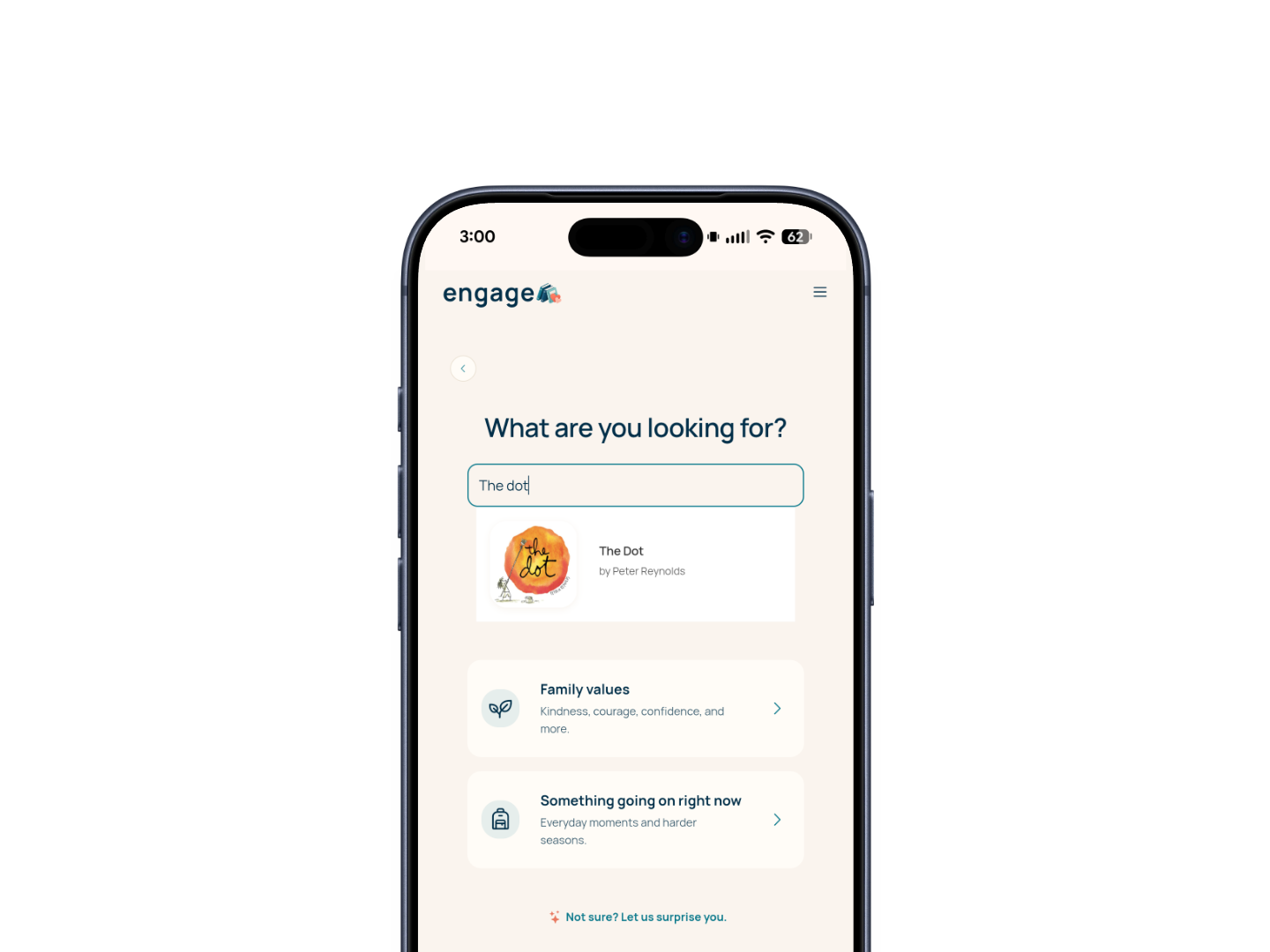
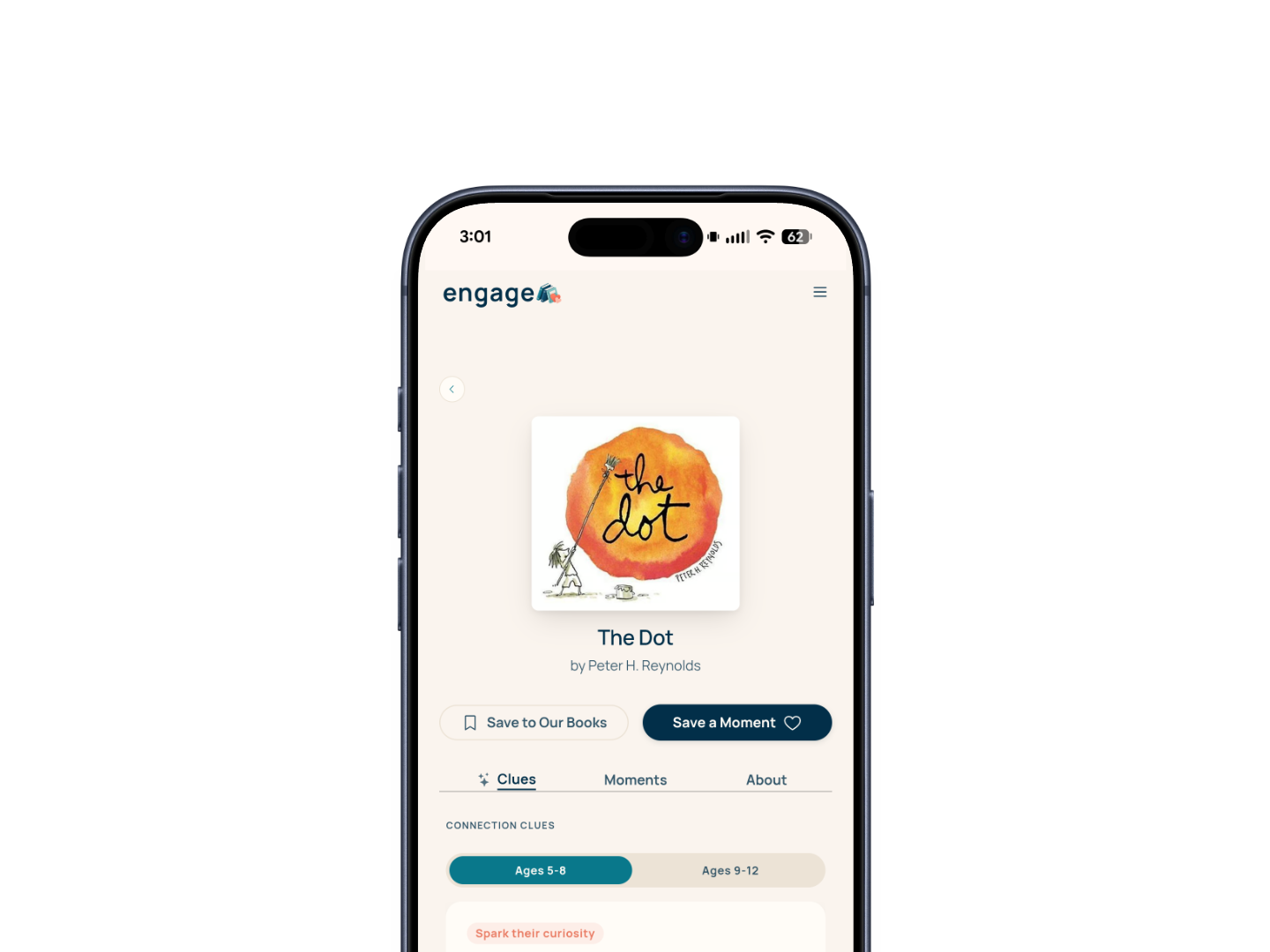
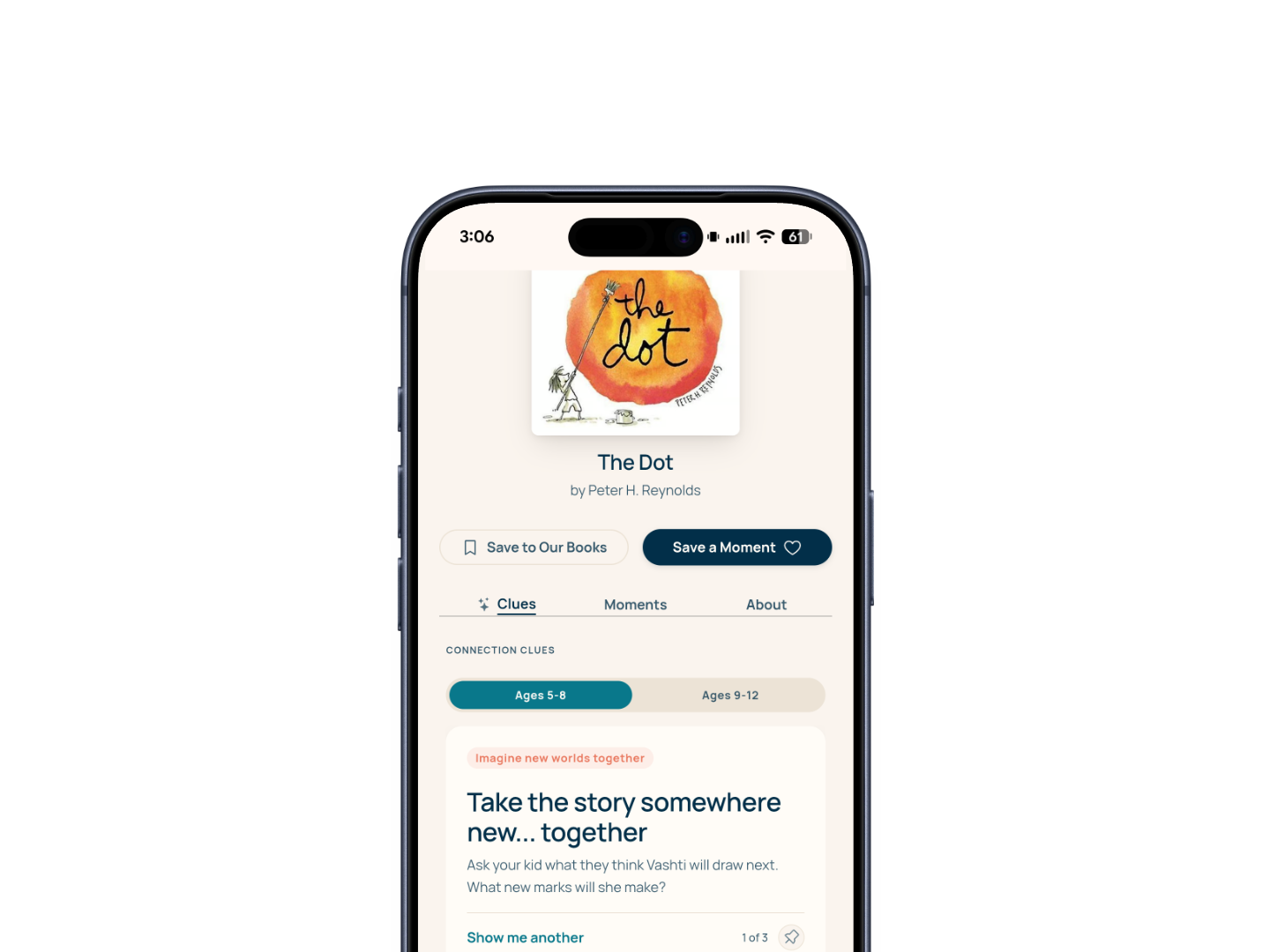
After you sign up, enter your book’s title. If it’s in the ENGAGE catalog, select it to see its information and book-specific guidance. Here’s an example with The Dot.
Try ENGAGE Tap a step to see the screen.01Type in your book
Enter the title in the search field, then select your book from the results.
02See your book’s information
Select the book to open its page. Use “About” to see information about the book.
03Find guidance for reading together
Open “Clues” and choose the age band that fits your child. Read the book-specific guidance and choose what fits your time together.
Sign up for ENGAGE to find guidance for reading a book together.
Sign up for ENGAGE14 days free, then $6.99/month at the founding price. No card required for the trial. Works in your browser.